Top 4 trending bathroom cabinet paint colors for 2023
May 8, 2023
Why weather-resistant paint is important for exterior wall painting
May 19, 2023
Exterior paint can protect sound wood. It cannot turn soft, rotten wood back into a board that holds a fastener. Before we talk about primer or color, we have to decide whether the damaged area can be filled, whether one section should be spliced in, or whether the entire board needs to be replaced.
I am Justin Brown, founder and lead estimator at J Brown Painting. The practical test I use is simple: how much of the board is still sound, and how deep does the damage go?
The short answer: repair a small defect, replace failed wood
If the damage is localized and at least roughly 80 percent of the board is still sound, a filler repair or a partial replacement may make sense. If more than roughly 20 percent is soft, wet, or rotten, replacing the board is usually the better decision.
That 20/80 split is a field rule, not a laboratory formula. Location matters. Access matters. A gutter may be attached to the fascia. The real question is whether the remaining wood is solid enough to keep doing its job.
Start with the screwdriver test
On an area that is already visibly damaged, apply gentle pressure with your thumb or the tip of a screwdriver. If the wood is firm and resists the pressure, the problem may be near the surface. If your thumb, a pen, or a screwdriver goes into it easily, the fibers have lost their strength. That section needs replacement.
Do not test only the center of the obvious spot. The useful boundary is where the soft wood stops and sound wood begins. That tells us whether the job is an 8-to-12-inch repair, a partial splice, or a full-board replacement.
When an exterior wood filler repair makes sense
For a small, localized defect in otherwise solid wood, we often use Bondo, a two-part filler mixed with a hardener. It works well for a small hole, crack, or limited area of decay after all loose and decaying material has been removed.
I generally keep a Bondo repair to about 8 to 12 inches. The filler cures quickly and becomes very hard, but it is still a repair, not a new board. I tell homeowners to think of it as a temporary, lower-cost option. In my experience, a good exterior Bondo repair can last roughly three to five years depending on where the wood sits on the house and the conditions around it. That is a planning range, not a guarantee.
The basic sequence is:
- Remove all loose and decaying wood.
- Confirm that the wood left around the opening is sound.
- Mix the filler and hardener.
- Fill and shape the localized defect before the material cures.
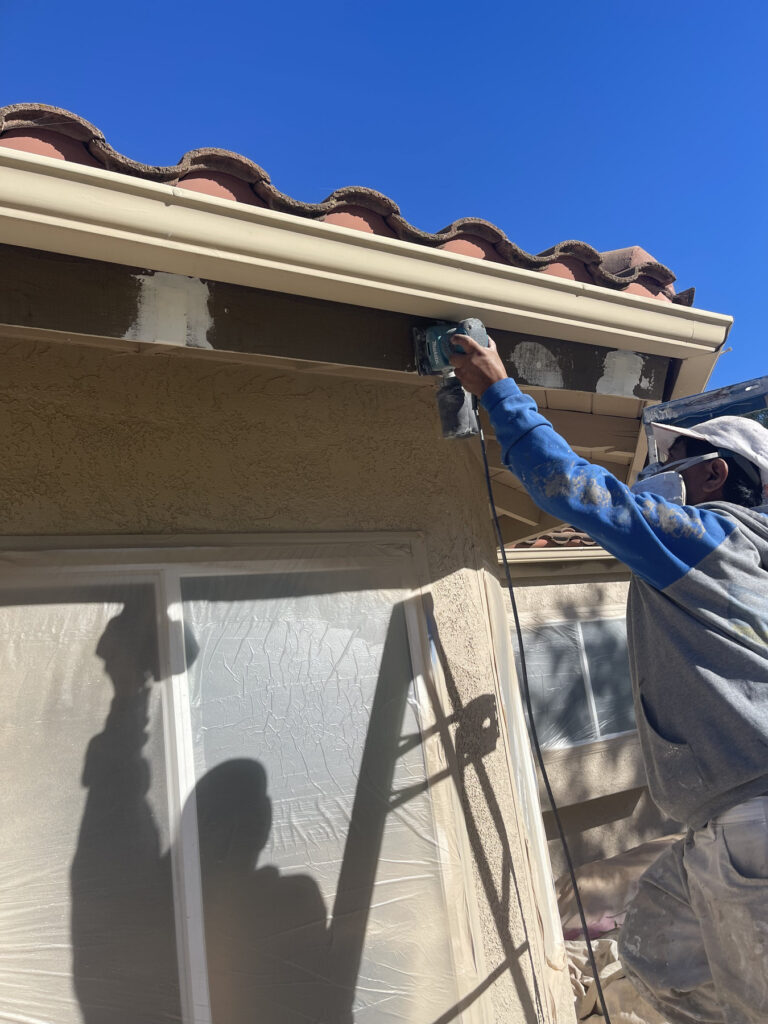
- Sand the repair smooth.
- Prime the exposed repair and bare wood.
- Paint the full area so the repair is protected and blended into the surrounding finish.
If the person preparing the estimate cannot show where the sound wood begins, “we will just fill it” is not enough of a scope.
When a partial wood replacement is the smarter option
Sometimes most of a long board is solid and only one end or short section has failed. In that case, we can cut out the damaged portion and install a new section, fastening the splice back to sound wood.
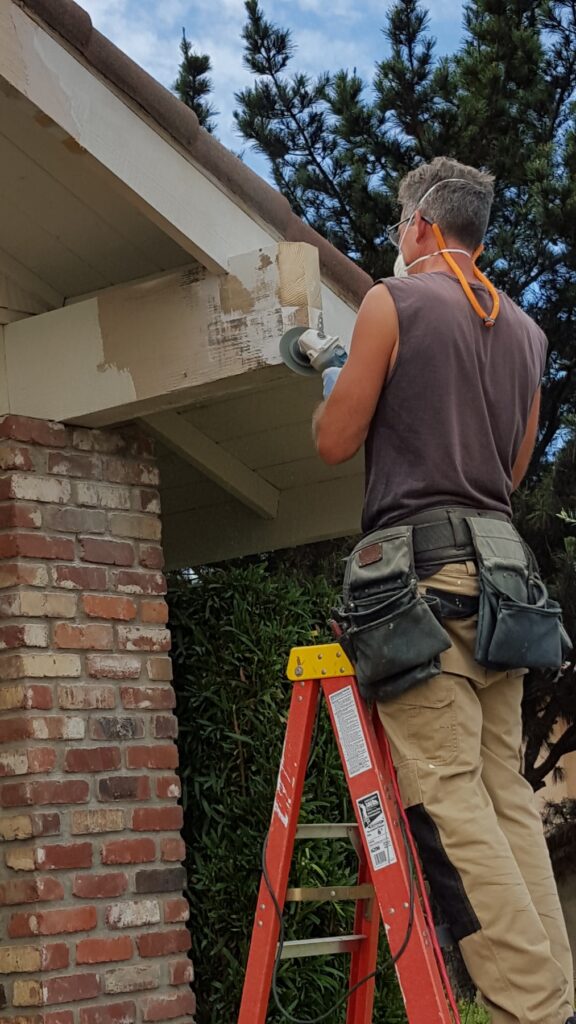
Fascia is a good example. If gutters are attached to a long fascia board and only about 10 percent of it is rotten, replacing the entire board may also mean removing and reinstalling the gutter. A properly planned splice can replace the failed wood without turning a localized repair into a much larger job.
A splice is not the same as filling rot. The damaged section is removed and replaced with wood. The decision still depends on the remaining board being solid enough to support the new section.
Five signs the board should be replaced
1. More than roughly 20 percent is soft, wet, or rotten
At that point the repair is no longer localized. Filling several weak areas can cost labor without leaving enough original wood to justify saving the board.
2. A screwdriver enters the wood easily
This is the clearest field sign that the fibers are no longer sound. Replace at least the affected section and keep cutting back until the new work can connect to solid material.
3. The damage extends deep into the board
A shallow defect and deep decay are different jobs. If the rot continues well beyond the surface, a filler repair only covers the opening; it does not give the board back its strength.
4. The board is warped or will not hold nails
Wood trim and fascia still have to hold their shape and their fasteners. If the board is too warped or degraded to hold nails, it has stopped functioning as a sound substrate.
5. Mushrooms or other obvious fungal growth are present
Mushrooms growing from a board are a sign of fungal decay and a lot of moisture in the wood. That is replacement territory, not a cosmetic fill-and-paint repair.
Dry rot and termite damage in San Diego
The two common exterior wood problems we see around San Diego are dry rot and termite damage. Termite droppings can point to activity, while soft or crumbling wood shows us how much of the material has already failed. The visible mark alone does not decide repair versus replacement; the condition and depth of the wood do.
That is why the estimate should separate three possible scopes:
- Localized filler repair for a small defect surrounded by sound wood
- Partial replacement or splice when one section has failed but most of the board remains usable
- Full-board replacement when damage is widespread, deep, warped, or unable to hold fasteners
What should be written into a wood-repair estimate
“Wood repair as needed” is too vague. Before work begins, the estimate should identify the visible locations and explain how the price will change if preparation exposes more damage.
Ask these questions:
- Which locations are being filled, spliced, or fully replaced?
- How far will the crew cut back to reach sound wood?
- Are gutters or other attached components affected by the repair?
- Are priming, caulking, and painting the repaired area included?
- What happens if hidden damage is found after loose wood is removed?
Those answers make two estimates comparable. One contractor may be pricing a surface fill while another is pricing replacement; the totals should not look the same because the scopes are not the same.
Wood repair vs. replacement FAQ
Can Bondo be used on rotted exterior wood?
It can be used for a small, localized defect after the loose and decaying wood has been removed and the surrounding material is sound. I keep those repairs to roughly 8 to 12 inches. It is not the right answer for a board that is soft through a large area or deep into the wood.
How long does an exterior Bondo repair last?
My practical planning range is roughly three to five years for a good repair, depending on its location and conditions. It is a temporary repair rather than a promise that the board will perform like new wood.
Do I have to replace an entire fascia board?
Not always. If most of the fascia is sound and the damaged portion is localized, a partial replacement or splice may make more sense, especially when a gutter is attached. If more than roughly 20 percent is soft or rotten, I usually recommend replacing the whole board.
How can I tell whether wood rot is only on the surface?
Check how firmly the damaged area resists gentle pressure and look at how far the soft material extends. If a screwdriver goes in easily, the decay runs deep, or the board will not hold a fastener, replace the affected wood instead of filling the face.
Should wood repair happen before exterior painting?
Yes. The repair decision comes first, followed by sanding, priming bare or repaired wood, caulking where the scope calls for it, and painting. A finish coat should not be used to conceal wood that is too weak to remain in place.
Choose the smallest repair that still leaves sound wood
The goal is not to replace more wood than necessary, and it is not to save a board that has already failed. Use filler for a small defect, splice a localized failed section when the rest of the board is solid, and replace the board when the damage is widespread or deep.
J Brown Painting handles minor exterior wood repair and replacement as part of painting preparation. See our wood repair service in San Diego, or review how wood preparation fits into a complete exterior painting project.