

A Team Specializing In Cabinet Painting In San Diego
Expert Cabinet Painting in San Diego
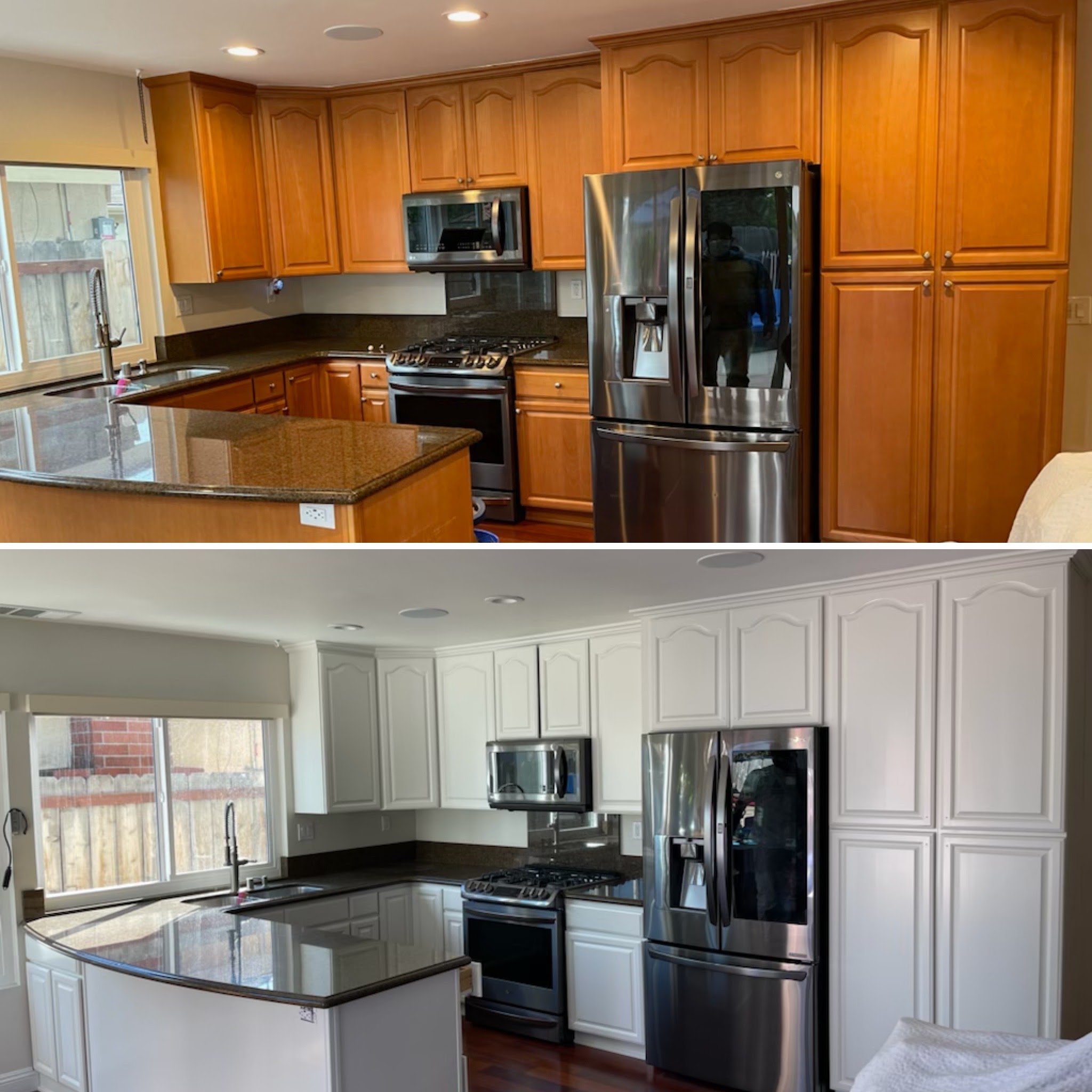
Are your kitchen cabinets outdated? Are they super dark, making your kitchen look dim and small? Maybe you want more of a beachy feel to brighten up your space? Or maybe your cabinets are chipping or stained with grease. Is your bathroom vanity worn? We can take care of all of that for you! Because cabinets get so much use and are often the focal point of a room, we use top of the line materials and don’t skip any steps when painting them. Our detail-oriented and methodical approach to painting cabinets prevents paint drips, ensures longevity, and is what sets us apart from our competitors. We use a specialized shellac primer and a paint that is extremely chip, peel, and scratch resistant.
If you’re tired of the way your kitchen cabinets or bathroom vanities look, you don’t have to pay a fortune to have new doors installed. Save money and give your kitchen cabinets or bathroom cabinets a facelift by simply having them professionally painted by our experts who specialize in cabinet painting in San Diego.

Why homeowners choose J Brown Painting for cabinet work
Cabinets are the job San Diego homeowners get wrong most often when they hire the wrong painter — and it is almost never the color they picked. It is skipped prep. Our founder and lead estimator, Justin Brown, has been estimating and painting kitchen cabinets across San Diego for 16 years, and our process is built around the steps that decide whether a cabinet finish lasts: doors off, everything labeled, every surface degreased, sealed with a shellac-based primer, and sprayed — not brushed — for a factory-like result.
Below is what the job actually includes, what it costs as a planning range, and how to tell you are hiring someone who will not cut the corners that cause peeling and premature failure.
Most cabinet painting bids that come in dramatically cheaper are missing a step. We do not cut them, and we tell you exactly what is in the price so you can compare bids on the same basis.
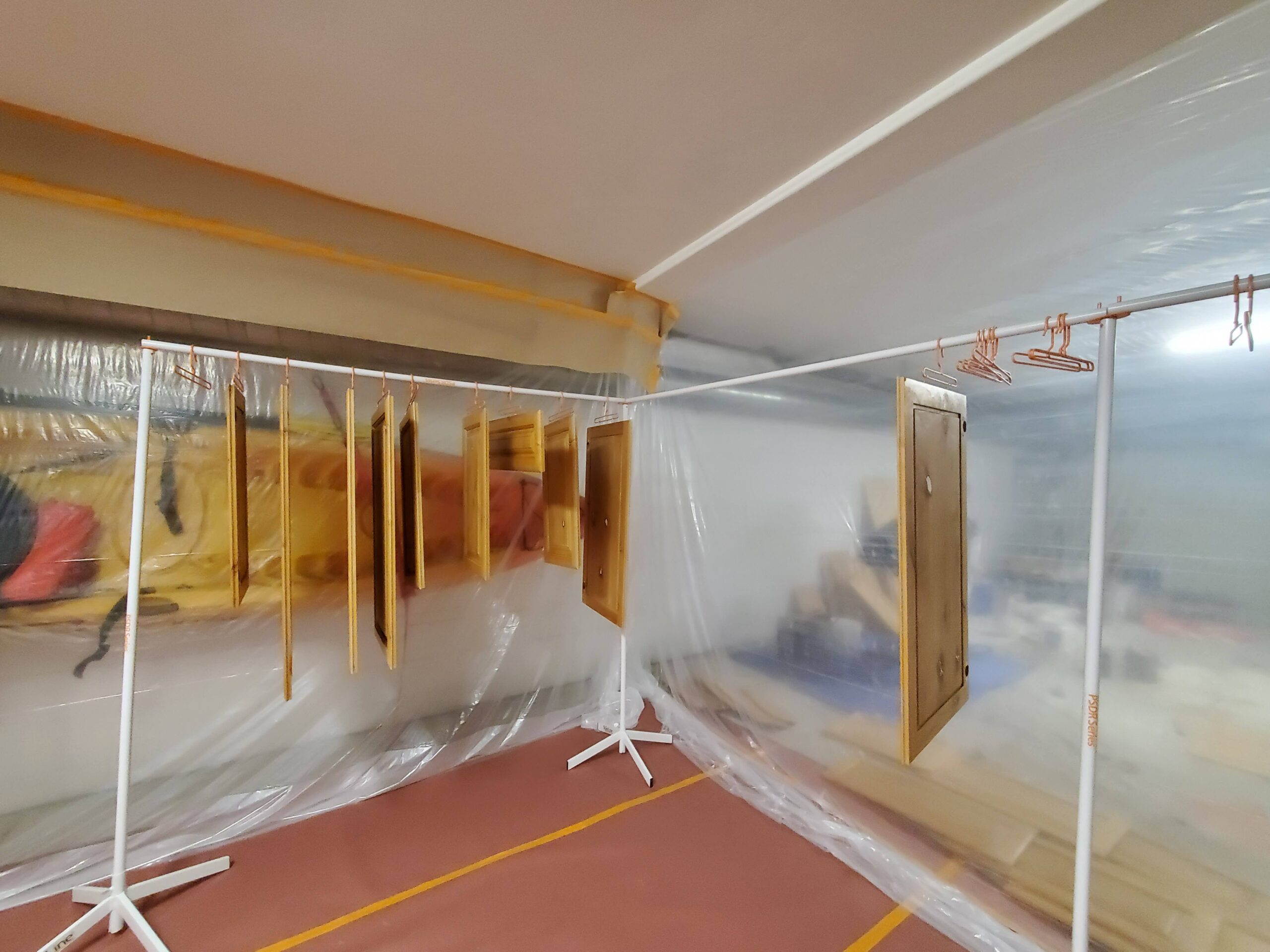
- Doors and drawer fronts come off. Painting around hinges is the fastest way to shave hours off a bid, and it leaves visible brush strokes around every hinge for the life of the job. We remove doors, drawer faces, and all hardware — pulls and hinges both.
- Everything gets labeled. Every door and drawer goes back exactly where it came from, so nothing hangs unlevel or fails to close.
- Every surface is degreased before it is sanded. Cabinets carry cooking grease and hand oils that paint will not bond through. This is the step we see skipped most often on jobs we get called to fix, and it is the one that decides whether the finish holds.
- We prime with an alcohol-based shellac primer — specifically BIN shellac. Generic, general-purpose water-based primers have been known to peel on slick surfaces like cabinets. Some bonding primers are made for the job and marketed as reliable on cabinets, such as Sherwin-Williams Extreme Bonding Primer, a waterborne urethane-modified acrylic. We do not take chances on adhesion: BIN shellac is tried and tested over many years, and using it is a hard rule in our process rather than a judgment call made on site.
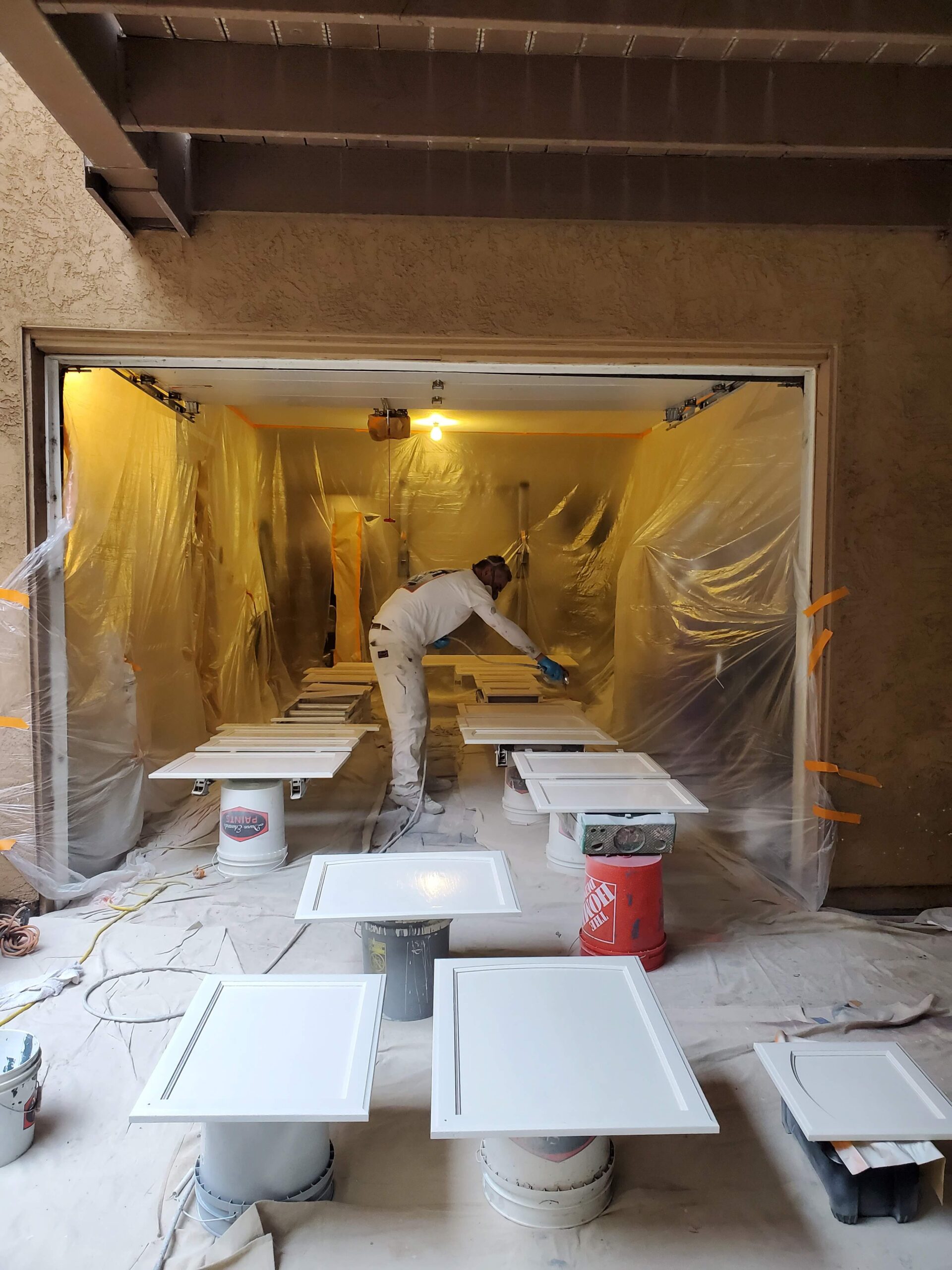
- We spray, not roll, kitchen cabinets. A fine finish spray tip is what produces a factory-like, smooth result. Rolling leaves a light texture called stipple — comparable to orange peel — which is fine on a hallway cabinet but not what most homeowners want staring back at them in a kitchen they look at every day.
If a bid does not mention degreasing, does not specify a shellac primer, or does not say the doors are coming off, ask why. Those three questions alone will tell you most of what you need to know about who you are hiring.
What kitchen cabinet painting costs
Cabinet pricing is not driven by the square footage of your kitchen — it is driven by how many doors and drawers have to come off, get prepped, primed, sprayed, and rehung.
- Small to standard kitchens — from about 10 doors and 10 drawers up to about 20 doors and 10 drawers — typically run $4,500 to $6,250.
- Large kitchens — 40 or more doors and 20 or more drawers — typically run $6,250 to $9,000.
- Anything in between lands in between. The count is what places your kitchen on that scale, which is why it is the first thing we ask for.
These are planning ranges, not a quote. Your actual price depends on the condition of your cabinets, your layout, and what we find when we walk your kitchen — that walk-through is free and it is where the real number comes from.
If space on site genuinely does not allow removing the doors, we mask each hinge meticulously and trim the tape tight with a blade rather than skip the step — you keep the finish quality, it just takes longer to prep. If budget is the constraint, priming and painting the hinges in place is a legitimate way to bring the cost down, as long as it is a choice you make on purpose rather than something a painter does quietly to save an hour.


The process, briefly
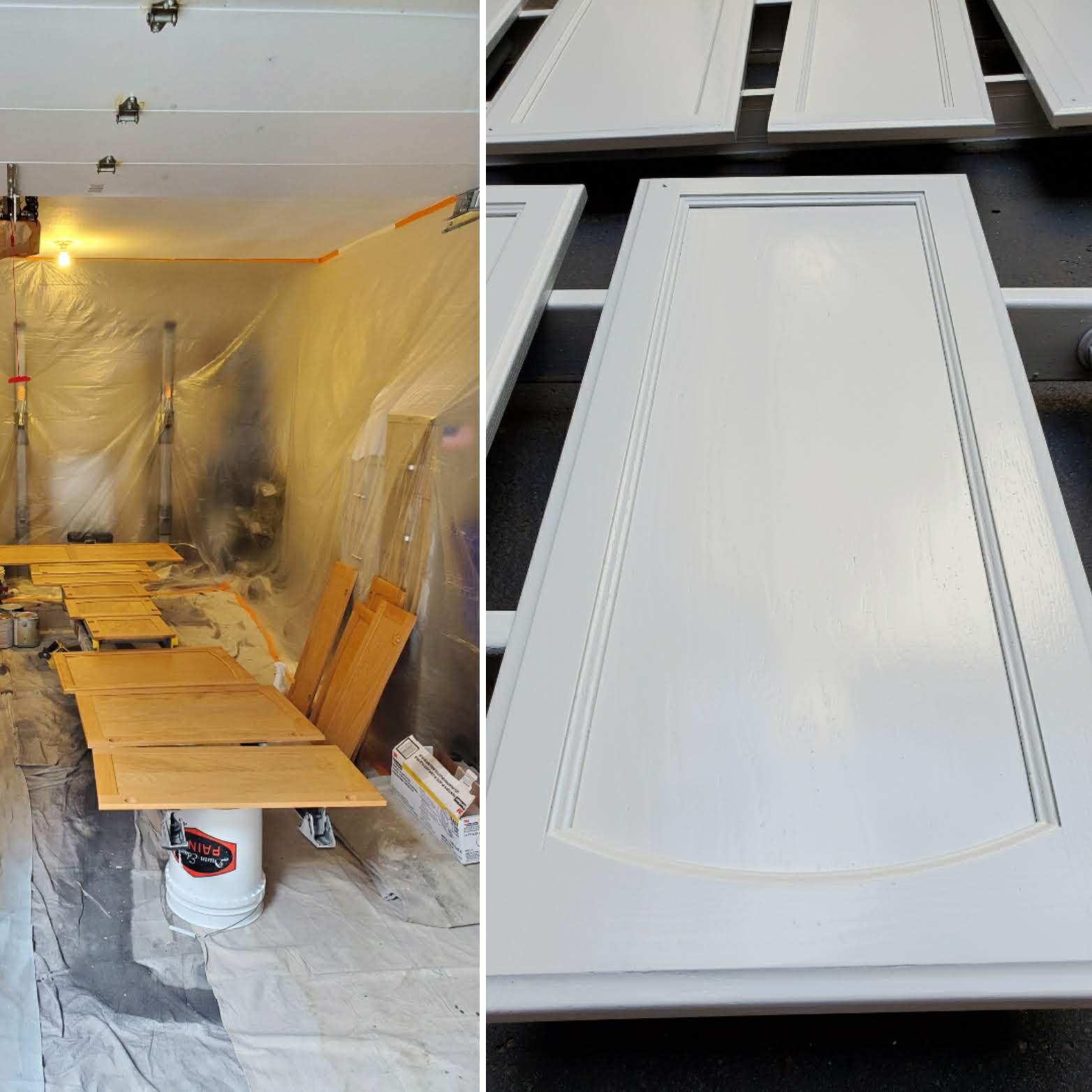
Doors and hardware off, everything labeled, every surface degreased, then sanded — 120 to 150 grit where there are imperfections to take out, 180 for a general scuff, 220 for final prep on cabinets that are already smooth. Then BIN shellac primer, a light 280 to 320 grit pass over the primer to knock it perfectly smooth, and two sprayed coats of a cabinet-grade enamel such as Sherwin-Williams Emerald Urethane, Sherwin-Williams Cabinet Gallery Series, or Dunn-Edwards AristoShield — typically in semi-gloss, so the finish wipes clean and dries hard. Done this way, a painted cabinet can come very close to a factory finish for a fraction of what refacing or replacing costs.
For the full step-by-step breakdown of what should happen at each stage of a cabinet job — and what a shortcut at each stage looks like — read our complete guide to kitchen cabinet painting cost and process.
How long a professionally painted cabinet lasts
Done with full prep — degreased, sanded, shellac-primed, and sprayed with a premium cabinet enamel — our experience is 10 to 15 years. Where you land in that range has more to do with how hard your kitchen gets used than with the paint itself: a kitchen cooked in nightly with kids pulling drawers open will show wear sooner than one that is not, and wear shows first around the handles and pulls.
Even a well-done cabinet job shows minor wear over time — a small chip from a fingernail, a light scuff where the trash gets pulled out. That is normal use, not a failed paint job, and it is usually solved with a small touch-up rather than a repaint. We are not going to promise a wear-free surface on something touched dozens of times a day, but we will tell you honestly what to expect.
Paint, reface, or replace?
Paint is the right call if you like your current door style and just want a different color, your cabinet boxes are structurally sound, and you want the best value for the money — a standard kitchen generally runs $4,500 to $6,250 to prime and paint, against upward of $10,000 to reface the same kitchen.
Refacing or replacing are different decisions, driven by the door style or the layout rather than the finish. We cover the full comparison, including when each option actually makes sense, in cabinet painting vs. cabinet refacing. If you are weighing paint against stain instead, see should I paint or stain my cabinets.
Current color trends
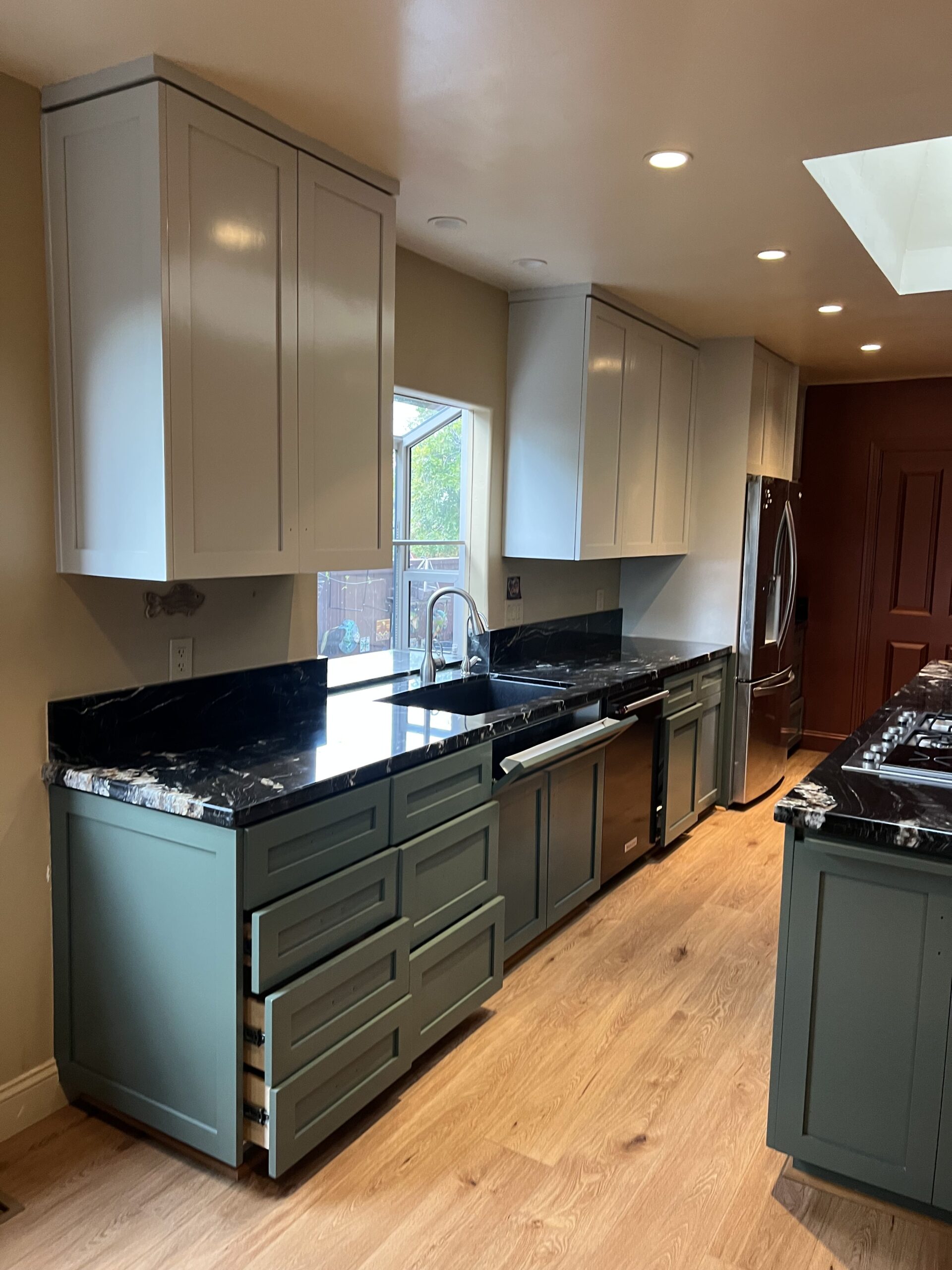
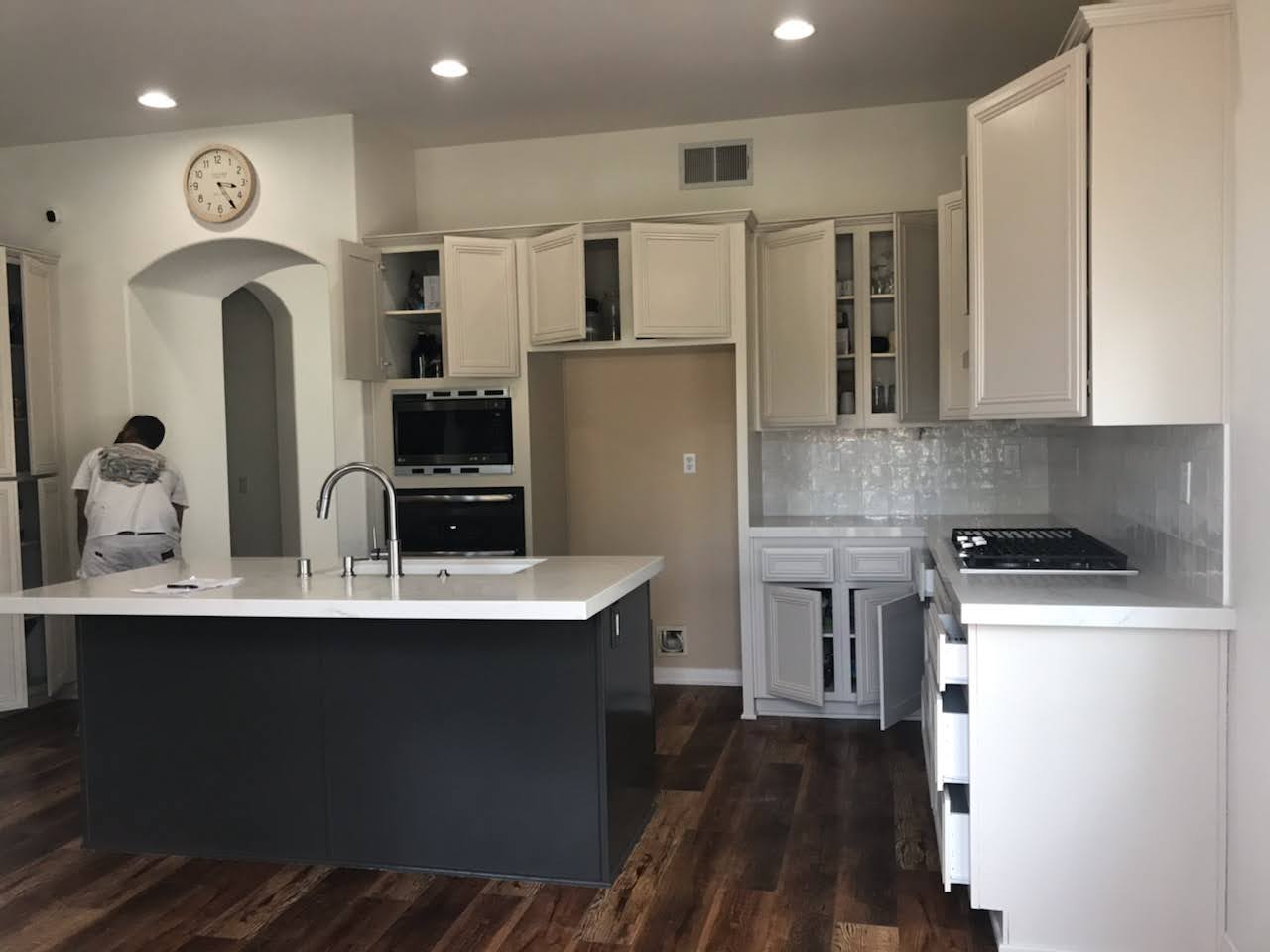
The shift right now is away from bright whites toward warmer whites and soft greiges — homeowners still want light cabinets, they just do not want the kitchen to feel sterile. Sherwin-Williams Alabaster and Accessible Beige are common choices, and two-tone kitchens remain popular: a warm white on the uppers with a dark charcoal or green on the lowers. What is clearly fading is cherry wood, dark espresso, and anything with a yellow or creamy cast.
For the fuller color breakdown, see our cabinet color trends guide.

Get a real number for your kitchen
Count your doors and drawers before you call anyone — that number tells us more than a room measurement does, and it lets you compare quotes on equal footing. Then let us walk your kitchen. We will tell you honestly whether painting is the right move for your cabinets, or whether refacing or replacing would serve you better, and we will give you a firm number before any work starts.
Contact J Brown Painting for a free cabinet painting estimate in San Diego.
Our Videos
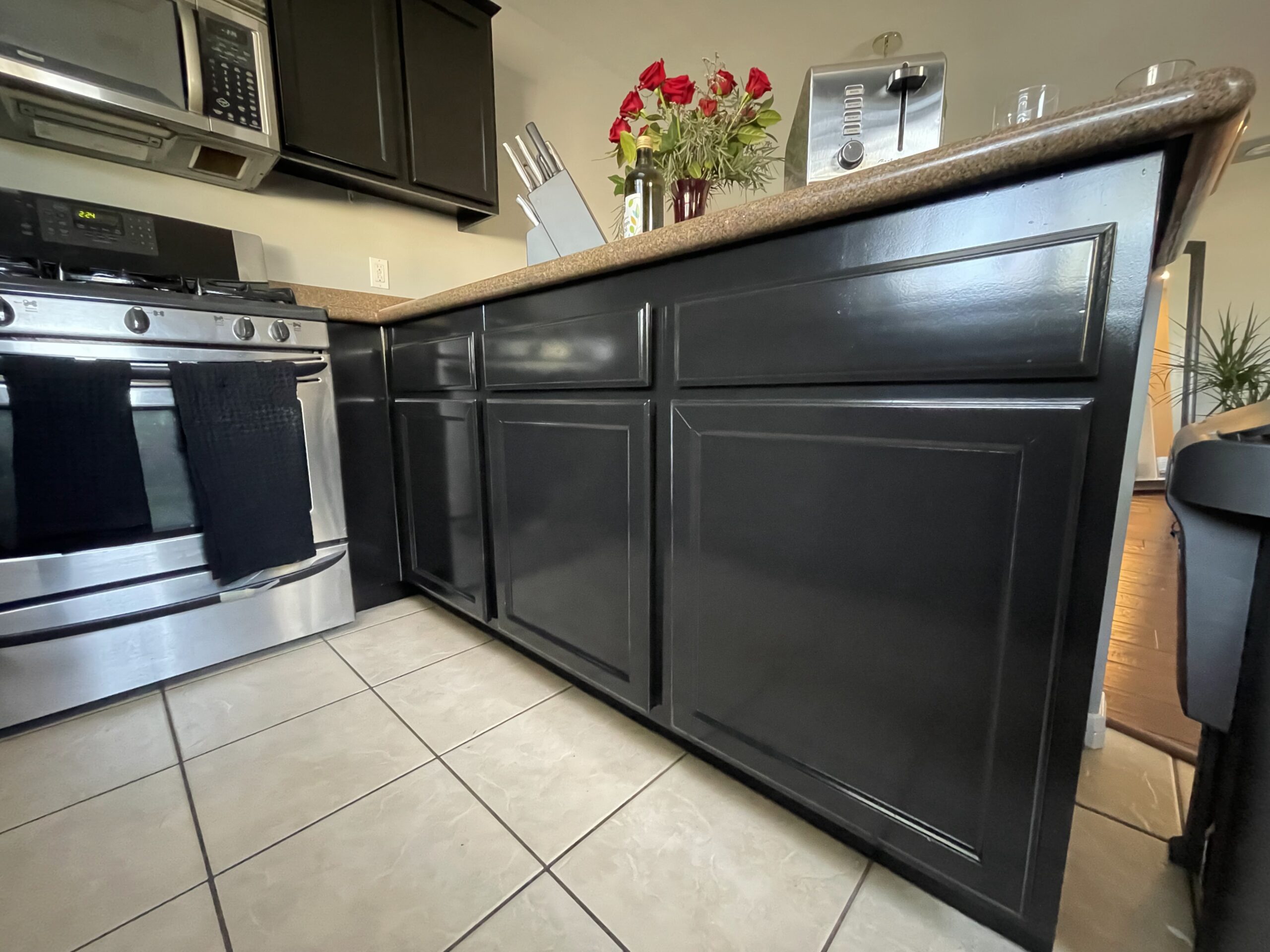
Cabinet Painting Gallery

FAQs
There is no durability difference between the two, as long as the same film thickness is achieved. What rolling buys is speed, and speed is labor, so it makes sense on cabinets nobody looks at closely: hallway cabinets, the uppers above bedroom closets, sometimes a guest bathroom vanity.
Re-staining cabinets that have already been finished is a different matter. Stain penetrates into the wood, so it cannot be sanded off the way a surface coating can — it means stripping down to bare wood, hours of careful sanding without damaging the surface. That pushes a standard kitchen to around $10,000, roughly double the cost of painting.
Stain also behaves differently on different woods. The same stain looks one way on pine and another on birch or cedar, and if your cabinets are built from more than one wood, the result will not look uniform. Paint gives you a uniform, opaque finish and unlimited color choice.
If your cabinets have been finished before, our honest recommendation is to prime and paint rather than strip and re-stain.
120 to 150 grit for aggressive prep where a surface needs real cutting back. 180 for general scuffing. 220 for final prep on smooth cabinets. Then 280 to 320 to smooth the primer before the finish coats go on.
The point of the sanding is not to remove the old stain — paint and primer sit on top of it. It is to cut through the clear coat sealer so the primer has something to grip, and then to leave the primer smooth enough that the finish coat looks like factory work rather than a repaint.
It also hides mismatched wood. Many kitchens have cabinet boxes and doors built from different species, or replacement doors added over the years that never quite matched. Stain highlights that difference; paint removes it entirely.
Sprayed with a fine finish tip, the result reads as a factory finish rather than a painted-over kitchen.
