Maximizing Rental Income: The ROI on San Diego Property Management Painting
February 21, 2024Transforming Your Home: A Guide to Hiring Top Exterior & Interior Painters in San Diego
March 18, 2024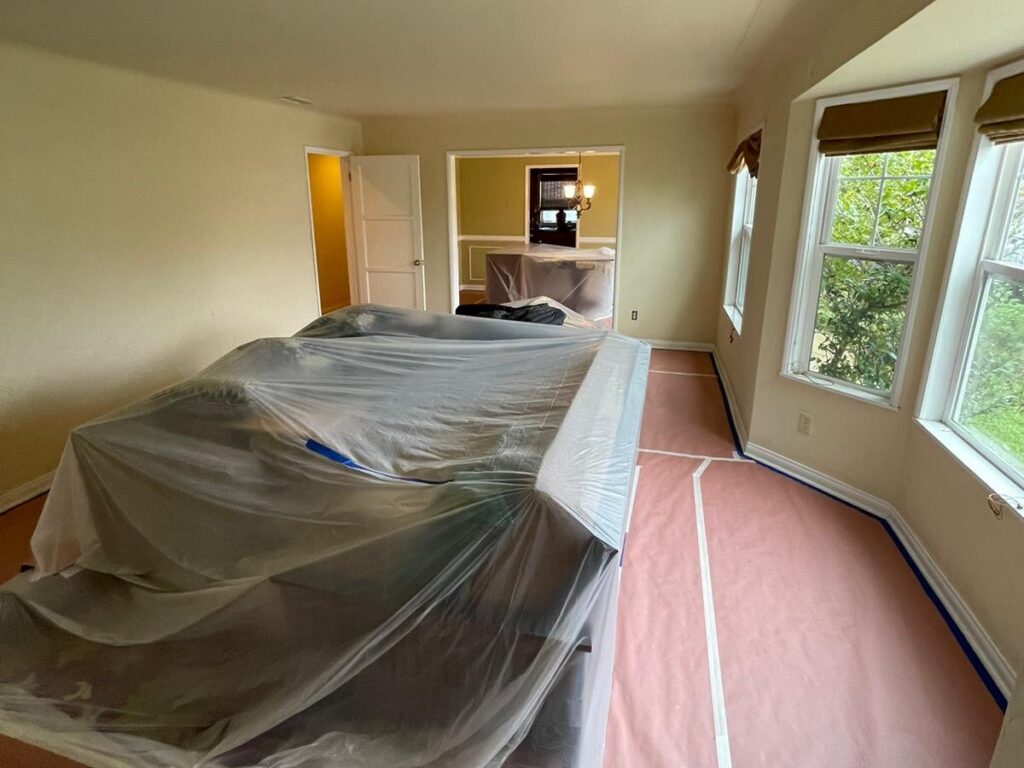
When someone asks whether it is cheaper to paint the interior themselves or hire painters, I start with a different question: what are you comparing? Paint and a roller are not the same thing as a completed, protected, cleaned-up room.
Doing a limited project yourself can make sense. Hiring a crew can make sense too. To compare them fairly, count the work, the supplies, your time, and the finish you expect—not just the price of the paint.
Here is the comparison I would want a San Diego homeowner to make before buying supplies or accepting an interior painting bid.
Start with the same rooms and surfaces
“Painting the room” can mean the walls alone. It can also mean ceilings, doors and casings, baseboards, and closets. Those are different projects, and comparing a walls-only shopping list with an estimate for everything will give you a misleading answer.
Write down the rooms, then the surfaces you want painted in each. Note any repair work separately. If one option excludes the ceiling or damaged drywall, make the same exclusion when you compare the other option.
In our estimates, those scope distinctions matter. If the budget needs to come down, I would rather discuss leaving out ceilings or closets that can wait than quietly remove preparation from the surfaces we are painting. Our guide to lowering an interior painting quote explains that approach.
The supplies list is longer than most people expect
A completed project needs more than the paint itself. I would budget for brushes, roller covers, poles, buckets and grids, tape, masking plastic, paper, caulk supplies, ladders, and cleanup materials. The exact list depends on the job.
Some supplies may already be in your garage. Others may need to be bought for this project. Count what you actually have and what you still need. A comparison that leaves out masking and preparation can make the DIY side look cheaper than the project you intend to finish.
Products and tools also need to suit the surfaces. A cabinet finish is not ordinary wall paint, and a coating intended for spraying is not automatically suitable for a roller. Do not buy one product for walls, trim, and cabinets simply because all three need a new color.
Give your own time a value
My simplest budgeting suggestion is to assign a value to your own time. Then think through the hours you will spend preparing, protecting, painting, waiting between stages, cleaning up, and putting the room back together.
That calculation is personal. Your weekend may be a welcome chance to work on the house, or it may be time you need for work, family, and other responsibilities. The point is not to choose one hourly figure for everyone. It is to stop treating your time as free without deciding that it is.
A crew’s schedule is not a DIY time estimate. As one planning example, I have described about five days for a three-bedroom house’s walls, doors, and baseboards with our usual three-painter crew. That is not a promise for every house, and it does not mean one homeowner can do the same scope in the same time. Additional surfaces, repairs, and access change the job.
Ask what kind of finish you are trying to achieve
There is a difference between changing the color of an uncomplicated wall and wanting clean transitions at ceilings, baseboards, corners, and door trim. Those edges are often where the quality of an interior paint job is most visible.
In our interior process, we cut the wall edges with a brush and roll the wall while that cut is still wet where practical. The work needs control around the adjoining surface, not just coverage in the middle of the wall.
If you are leaving the ceiling or trim unpainted, keeping the new wall color off those surfaces is part of the task. Include that expectation when comparing your own project with a painter’s scope.
Protection is work you have to do either way
In my interior process, we use rosin paper to protect the floor and mask the items that could receive splatter. Larger furniture is often grouped toward the middle and covered. Outlet covers are removed rather than painted around.
Those stages take time before the room starts looking different. They also explain why a bid that includes careful protection should not be compared with a plan that ignores it. The final result includes the condition of the floors, furniture, windows, and fixtures—not just the walls.
Before hiring, agree on who moves the furniture. Most of our customers move it themselves to avoid that added scope; some ask us to include it in the estimate. Our interior preparation guide explains the homeowner’s part.

If a DIY project is already underway, explain what has been done
We get calls from homeowners who bought the materials and started, then realized the project was taking more time or control than they wanted to give it. Having the paint already does not tell a new painter what remains.
Explain which surfaces were cleaned, repaired, primed, and painted; identify the products; and show the unfinished areas. Some completed work may be usable, while other areas need assessment before the next stage. Do not assume a contractor can simply take over at the exact point where you stopped.
The same applies to a finish that is already peeling. A fresh coat over unstable paint is not the same scope as repainting a sound surface. Ask how the existing condition affects the preparation rather than looking only for a price to cover it.
What a fair professional estimate should explain
- The rooms and surfaces included, along with the exclusions.
- Preparation and repairs, not just the finish color.
- The wall, trim, or cabinet products and number of coats.
- Furniture moving, masking, floor protection, and cleanup responsibilities.
- The proposed schedule and the care instructions for the fresh finish.
At estimate time, we may not yet know your final color choice. If it does not cover the existing color adequately in two coats, additional coats have an additional price. Ask how that possibility is handled instead of assuming every color change has the same scope.
For using the room afterward, see our paint drying and curing guide. Finishing the painting, handling the surface, and routine cleaning are not automatically the same milestone.
DIY versus hiring interior painters FAQ
Is DIY interior painting always cheaper?
No single answer applies to every project. Compare the same surfaces and preparation, all necessary supplies, your time, and the finish you want. A paint-only shopping total does not represent the cost of the whole completed job.
Can I lower a painting quote by doing some work myself?
Discuss it before the scope is agreed. Moving furniture yourself may reduce that part of the work; leaving ceilings or closets out may also change the scope. Do not assume skipping preparation on the surfaces being painted is an equivalent saving.
Can a painter finish a DIY project I have already started?
Ask for an assessment of what has been done and what remains. Provide product information and explain the cleaning, repairs, primer, and coats already applied. The existing work may affect the preparation and final scope.
Does the same paint work for walls, trim, and cabinets?
Do not assume it does. These surfaces have different finish and handling requirements. Identify the actual products and their instructions, especially for a cabinet coating that may require spray application.
How do I compare two interior painting bids?
Compare the included rooms and surfaces, preparation, repairs, products, coats, protection, furniture responsibilities, and cleanup before comparing totals. A cheaper bid may describe a smaller or different job.
Choose the scope before choosing the price
If you are weighing DIY against hiring, tell us the rooms and surfaces you have in mind and whether you have started. Our interior painting service in San Diego explains our process. Request an estimate so the comparison reflects your home rather than a generic project.