
Should I Paint or Stain My Cabinets? The Ultimate Guide
September 24, 2025
How to Compare Exterior House Painting Bids in San Diego
August 26, 2026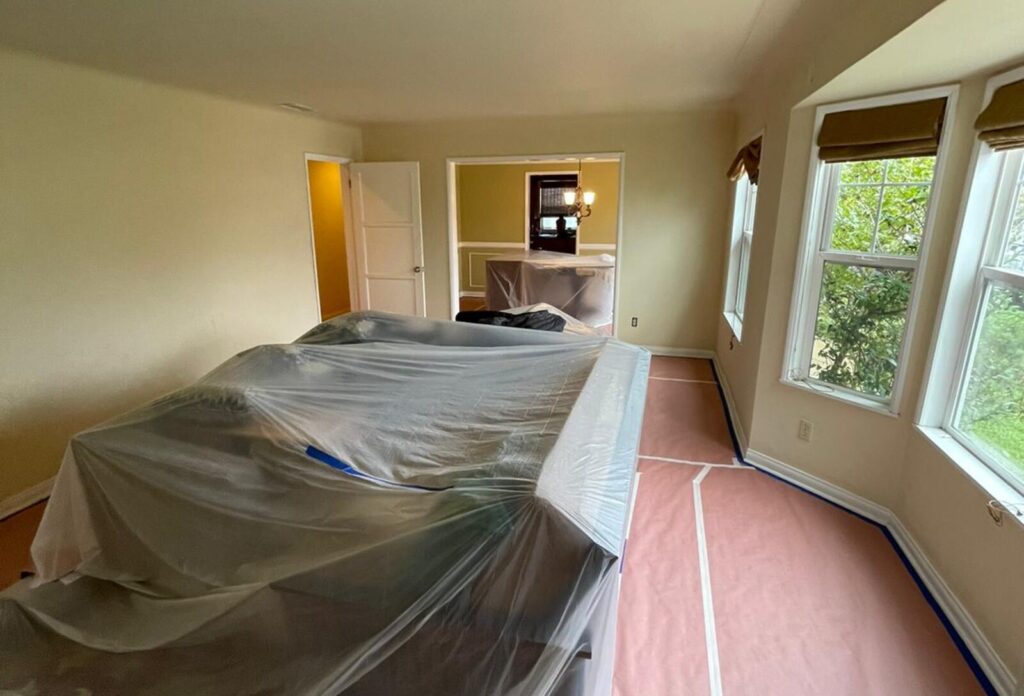
Most interior painting estimates show up as one number for the whole house. That number is hard to argue with and hard to adjust. If it lands above what you wanted to spend, your only obvious move is to ask the painter to sharpen his pencil — and that usually means quality comes out somewhere you can’t see it happening.
I bid interior work a different way. I price everything separately, so a homeowner can go with the options that actually work for their budget. You end up choosing how much of the house we paint, not how well we paint it. I’m Justin Brown, founder and lead estimator at J Brown Painting, and after sixteen years estimating jobs in San Diego, that’s the most useful thing I can explain to somebody who’s nervous about the number.
The five line items in an interior bid
When I write an interior estimate, it comes back to you broken into separate quotes:
- Ceilings
- Walls
- Doors and door casings
- Baseboards
- Closets
Each one carries its own price. Take all five, or take walls and baseboards and leave the rest for next year. You see what each piece costs before you decide, instead of negotiating a lump sum down and hoping the savings came out of a good place. And once you can see the lines, a couple stand out as the obvious places to trim.
Where the budget actually flexes
Ceilings, if you’re not changing the color
Ceilings are often in good shape, because they really don’t get touched. No furniture rubs against a ceiling and nobody puts their hands on it. Walls take the abuse; ceilings mostly just sit there.
So unless you specifically want to change the ceiling color, they’re usually low on the priority list. This is the first line I point at when a number needs to come down, because skipping it often costs you nothing you’d actually see.
Closets
Closet walls are usually covered by whatever’s hanging in them, so you can’t see them anyway — and they’re behind a door on top of that. Another line that can come out without changing how your home looks day to day.
Neither decision is final, either. Ceilings and closets are the two lines I point at first when a budget needs trimming, and if you change your mind partway through, you can add them back while we’re still in the house.
Matching your walls and ceilings
This one surprises people. If you make the ceilings and the walls the same color, same product, and same finish, it often reduces the price significantly.
The reason is labor, not material. The usual arrangement is walls in one color and ceilings, doors and trim in a bright white — and that difference is what creates the expensive part. Where two colors meet, we have to cut a line by hand: keeping ceiling paint off the wall and wall paint off the ceiling, around the perimeter of every single room. That’s slow, careful work.
When the ceiling and walls match, that line disappears. We paint significantly faster, and faster work means a cheaper quote for you — without taking anything out of the scope.
Your color choice is a cost decision
Here’s something most homeowners don’t know when they pick a swatch: the color you choose changes how many coats the job takes, and coats are what you’re paying for.
What you want is a color that covers in two. If you have yellow, pink, or red walls and you’re going to a white — even an off-white, and especially a bright white — there’s almost zero chance it adequately covers in two coats. You’ll see that pink, red, orange, yellow, or bright green bleeding through even after two full coats of a nice thick paint. Then you’re into a third coat, and the price has moved.
So I tell people to try to choose colors that aren’t a super drastic change from what’s already on the wall. In our experience, the existing colors that get covered well are grays, medium browns, and olive greens — those come out fine under off-whites and similar tones.
If your current walls are one of the strong colors, that doesn’t mean you can’t have the white you want. It means the estimate has to say what happens if it doesn’t. Ours does, in one sentence: if the paint color the client chooses does not adequately cover the existing color in two coats, there is an additional price for each additional coat required. At estimate time nobody knows yet which color you’ll pick, so putting it in writing up front is the honest way to handle it. This is a budget argument rather than a decorating one — if you’re still choosing a color, we’ve written separately about paint colors that make rooms look bigger and how to select paint colors for large rooms.
What doesn’t flex: the condition of the walls
Scope is negotiable. Condition isn’t. And there’s a real difference between two things that both get called “drywall work.”
Drywall patching is localized damage, usually six inches to a foot — small holes, nail holes, anchor holes, dents, minor cracks. Joint compound, sand smooth, spot prime, paint. It shows up on nearly every job as normal prep.
Drywall repair is a different job — cutting out damaged drywall, installing new with backer behind it, taping, multiple coats of joint compound, and matching the existing texture before anything gets painted. You see it with water damage, holes bigger than about twelve inches across, a tape joint that’s visibly failing, corner bead missing chunks, or big settling cracks in a ceiling.
The reason it matters when you’re reading a bid is that repair is its own line, and it should be spelled out rather than buried in a word like “prep.” If someone quotes your house without ever mentioning the water stain in the hallway, ask about it before you sign.
Baseboards sit in the same category. Painting your existing ones and replacing them are two different scopes with two different prices, and if you’re weighing that decision, it’s worth reading why you should replace baseboards before you finalize the bid.
Why one room costs more, per room, than the whole house
The same 12-by-12 room gets priced very differently depending on what else is being painted.
Round numbers, since the real ones depend on your house: say labor works out to $50 an hour and the walls in that room take seven hours. That’s $350 in labor, plus call it $100 in materials. Inside a larger job those hours sit alongside everything else the crew is already there to do. On its own, that one room is the whole trip.
That’s not opportunism — there’s no economy of scale in a single room. Most companies also have a job size minimum, because sending a crew from a job in Carlsbad down to one room in Scripps Ranch is an opportunity cost: a day they aren’t on a job that pays considerably more. In practice, most painters won’t take a job under about $500 including labor and materials, and we rarely take one under about $2,500.
So the two ideas work together: trim the scope, but keep what’s left in a single visit. Doing a couple of rooms in one trip almost always costs less than one at a time. These are round numbers used to explain the math, not a quote. Your estimate depends on your home.
What the week actually looks like
For a three-bedroom house, painting walls, doors, and baseboards, plan on about five days. Most companies want to start Monday and finish before the weekend, and they’ll staff to hit that — for us, three painters. That’s the sweet spot: enough to finish on schedule, not so many that they’re painting on top of each other or overwhelming the people who still live there.
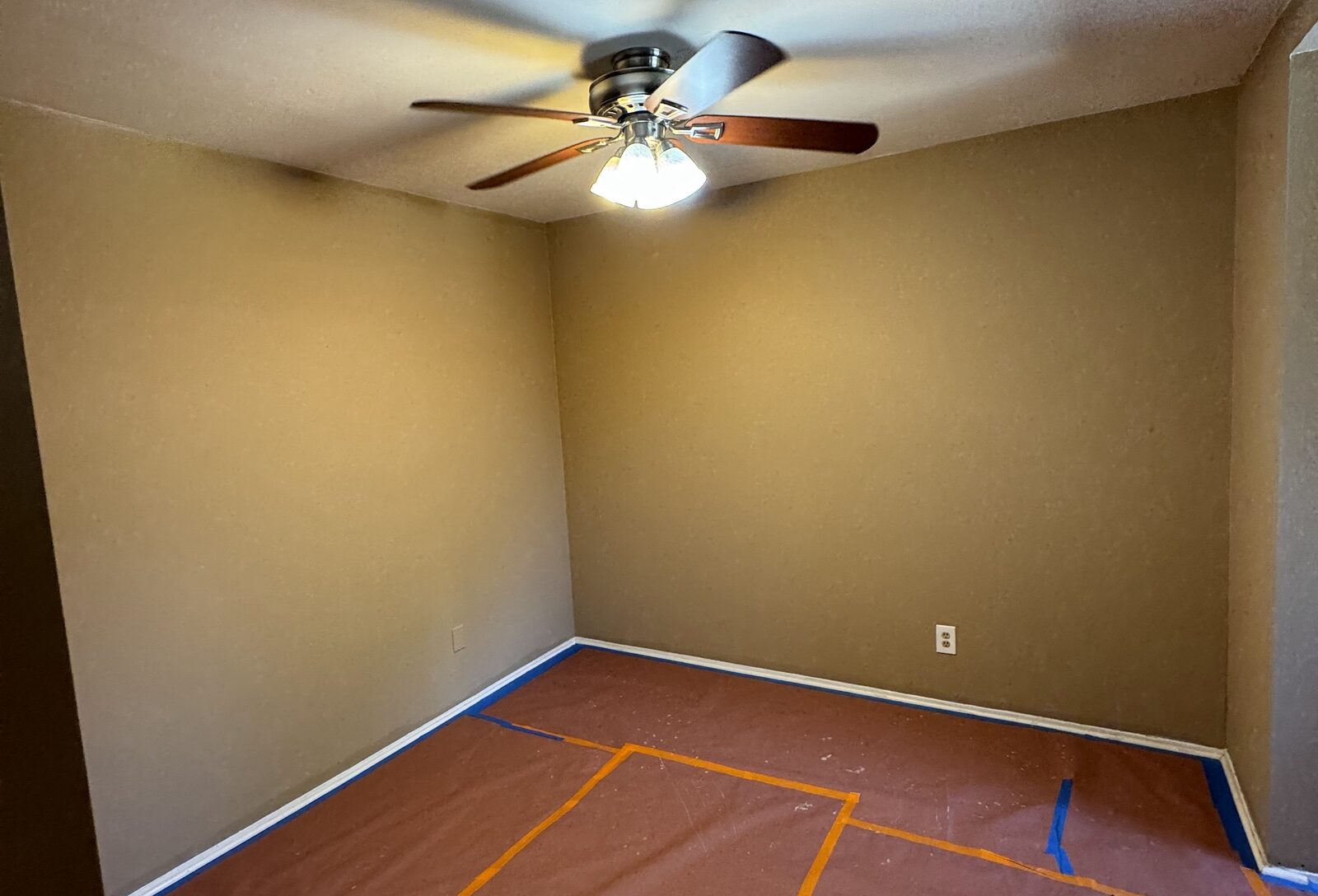
A good part of that time is protection, and it’s worth knowing what you’re paying for. First thing through the door, we roll out red rosin construction paper — heavy duty, meant to be walked on — taped down with a tape chosen not to pull the finish off your floors. Our painters carry ladders rather than drag them. Furniture goes to the center of the room and gets covered completely in painter’s plastic, which we prefer to canvas because you can tape it down, and taped plastic doesn’t sway and move air when someone walks past. Let us know during the estimate and we can discuss moving furniture for you.
Questions we get asked
How much would a painter charge to paint just one 12-by-12 room?
More than that same room would cost inside a whole-house job, because there’s no economy of scale and most companies have a job size minimum. As a rough planning idea, most painters won’t take a job under about $500 including labor and materials, and we rarely take one under about $2,500.
How long does it take to paint a three-bedroom house?
About five days for walls, doors, and baseboards — usually Monday to Friday with three painters. Scope changes it: walls only is a different job than walls plus doors, casings, baseboards, ceilings, closets, garage, railings, and cabinets.
Should my ceilings and walls be the same color?
They don’t have to be. But if you’re comfortable with it, matching the color, product, and finish removes the cut line between them and can bring the price down noticeably — one of the few ways to spend less without giving anything up in the finished work.
Can I have just some rooms painted?
Yes, and that’s exactly what the separate line items are for. You can take the main living areas and leave bedrooms for later, or paint walls throughout and leave ceilings alone. Ask for the bid broken out and you’ll be able to see what each choice costs.
The short version
If an interior quote comes back higher than you hoped, don’t start by asking for a discount. Ask to see it broken out by ceilings, walls, doors and casings, baseboards, and closets. Then ask three things: do the ceilings and closets actually need paint, what would matching the ceilings to the walls save, and will my color cover in two coats over what’s already there. Those change the number without changing how the work gets done.
If you’d like an interior estimate laid out this way — for a home in Encinitas, Poway, or anywhere else across San Diego County we work — get in touch with J Brown Painting and we’ll walk the house and price it line by line.