How to Lower an Interior Painting Quote in San Diego
August 26, 2026Stucco Painting & Repair in San Diego: A Contractor’s Guide
August 28, 2026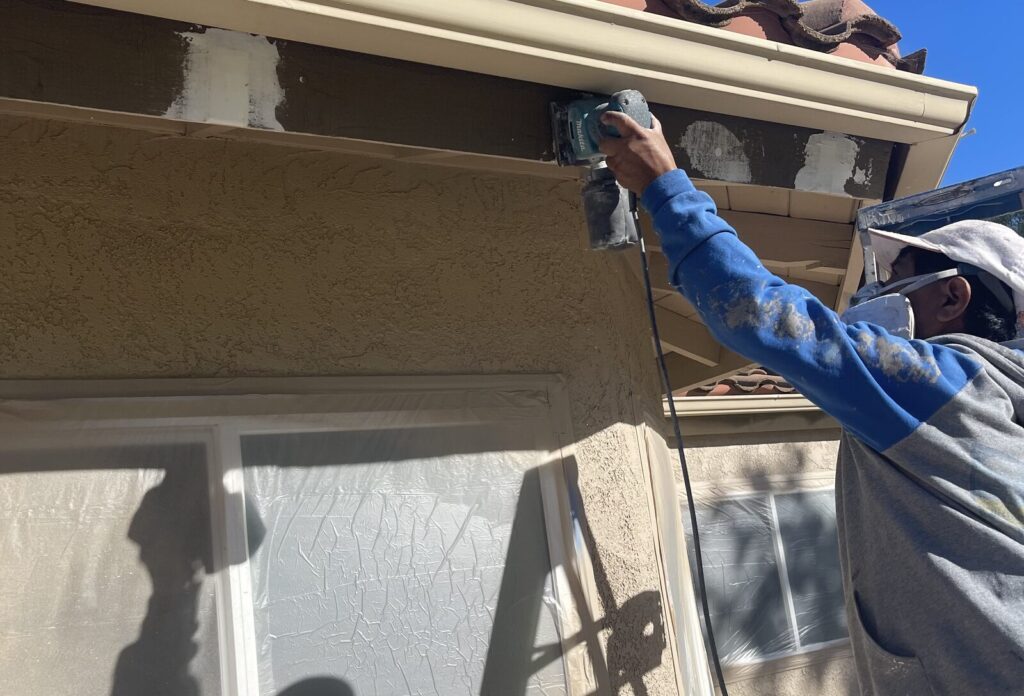
If you are about to have the outside of your house painted, the hard part is not picking a color. It is sitting down with three estimates, three different numbers, and no real way to tell which one describes the job you actually want.
I am Justin Brown, founder and lead estimator at J Brown Painting, and I have written exterior painting estimates in San Diego for 16 years, from the coast in Carlsbad and Encinitas out to Escondido and Poway. What follows is what an estimator is adding up when he walks your house, and where a thin bid gives itself away.
The cheapest bid is usually only cheapest on day one
Be cautious about comparing price alone. A thousand dollars cheaper up front is not saving you money if the job does not last. Think about where that thousand dollars comes from: prep gets skipped, inferior paint gets used, surprise change orders appear once the crew is on site, or the work is sloppy and you spend your own time calling the office to find out why nobody showed up today. None of that appears in the number on the front page. All of it appears later.
What an estimator is actually adding up
Underneath every exterior price are two things: labor hours and material cost. Materials means gallons of paint, plus primer, plus what we call sundries — roller covers, sandpaper, caulk, painter’s plastic, tape, buckets, grids, spray tips. Pricing starts with measurement, square footage for the body and linear footage for the trim. If that were all of it, every house of the same size would price the same. Here is what else I weigh while walking your property.
Condition of the surfaces
How much chipping and peeling paint has to be scraped and sanded? How much caulking is there? Is there failing stucco to patch, bare wood to prime, rotten wood to replace before anything gets painted? Two houses of identical square footage can be many hours apart on prep alone.
Access
Is this a short house with secure footing all the way around, or does much of the work happen slowly from a ladder at an awkward angle? Sometimes the only way to reach a wall is to set a ladder on the neighbor’s property. Access is the least visible cost driver and one of the largest, because it is pure time.
Masking and protection
Are there a lot of vinyl windows, plants, potted plants, cameras, and light fixtures to mask? On a house with a lot to protect, a crew spends a serious share of the job covering things before a drop of paint goes on. A bid that ignores that either runs long or something gets overspray on it.

Colors
A house is not one color: usually a body color, a trim color, a door color, often a separate garage door color. Every added color means another cut line, another product kept separate, more time.
Paint grade
The grade of paint is a genuine line item, not a rounding error. A better-to-best exterior product costs meaningfully more per gallon than the cheapest line the same manufacturer sells, and the gap between manufacturers is smaller than the gap between grades — we have written separately about which paint manufacturers we rate and why. If one bid is built on premium paint and another on the bottom of the shelf, they are not the same job.
What you want out of the job
Somebody selling next month who wants the house to look clean for photos is buying a different job than somebody who just bought and wants it to hold up for fifteen years. Tell your estimator which one you are.
The prep list is where an estimate tells the truth
This is the fastest way to separate a real exterior estimate from a thin one. A professional estimate carries detailed bullet points covering prep, something like this:
- Power wash items to be painted
- Mask off items not to be painted, protecting them from overspray and paint splatter
- Sand chipping and peeling paint
- Spot prime heavily sanded areas and any bare wood
- Caulk large cracks, particularly in the fascia and around doors and garage doors
- Pull any nails
- Stucco patch missing chunks or bubbling at the base of the stucco body
- Daily setup and cleanup
You only need to notice whether it is written down. Prep is invisible the day the job finishes and decisive five years later — which is why it vanishes first from a cheap bid.
“Paint exterior” is not a scope of work
If the items-to-be-painted section says paint exterior, or just trim, that is not specific enough, and the vagueness will not work in your favor. Things get excluded, and you find out which ones on the last day.
Instead of “trim,” a real scope names fascia, eaves, and window trim. Instead of “stucco,” it separates stucco body from stucco retaining walls — I have seen exactly that confusion, where the homeowner assumed the retaining walls were in and the bid only ever meant the body of the house. Depending on your property it should also name doors and casings, garage doors, front doors, pergolas or trellises, wood fences, gates, and wrought iron.
Two sections are usually missing from a weak estimate. Exclusions: what you said you do not want painted, plus what never gets painted anyway, like vinyl and walkways. And client acknowledgements: what you handle before the crew arrives, most commonly trimming back bushes touching the house.
The materials chart: the fastest way to compare two bids
A professional exterior estimate contains a materials chart with a column for each of the following:
- Substrate — front door, stucco body, fascia, and so on
- Manufacturer — Sherwin-Williams or Dunn-Edwards, which are the two we work from
- Grade — the actual product line, not just the brand
- Finish or sheen — typically flat for the body, satin for trim, semi-gloss for doors
- Color — per substrate, since the whole house is not one color
- Number of coats — typically two on an exterior
Column three is the one that gets abused. Plenty of quotes say “we use Sherwin-Williams” and stop there. Technically nobody is lying — it is Sherwin-Williams paint. It may also be the cheapest, most inferior line Sherwin-Williams sells. A quote that does not specify the grade is a problem. Get the product line in writing, then spend two minutes looking it up before you sign.
Column six deserves a follow-up. Ask whether the two-coat price means two quick passes with a sprayer back to back, or whether they let the first coat dry before the second. Ask whether they back roll, too. Most stucco textures in San Diego are heavy, which is why the paint gets sprayed to reach the nooks and crannies and then back rolled while wet — that is what works it into the texture instead of leaving it on the surface.
The rest of the paperwork
I would also expect the estimator’s cell number and the main office number, the address where the work will be performed, the contractor’s license number, language identifying the document as a home improvement contract, an itemized pricing chart, a payment schedule, and general conditions — the fine print covering workmanship, scope of preparation, pre-existing conditions, your right to cancel, and the final walkthrough.
On pricing, I am a believer in line items. We break an exterior into the main painting bid plus separate lines for stucco patching, the garage door, pergolas and trellises, and fences. Itemizing lets you cut scope instead of cutting quality — which is what happens when there is one number on the page and the only lever is arguing it down.
Licensing, insurance, and bonding
What follows is general information, not legal advice. Specifics change, so verify current requirements with the Contractors State License Board (CSLB) or your own insurer.
You can check any contractor yourself. Search for the CSLB contractor license lookup, enter the company, and the record shows whether the license exists, whether it is active or suspended, and the status of workers’ compensation coverage, general liability insurance, and the bond.
In plain terms: workers’ compensation covers an employee injured on the job, say someone who falls off a ladder on your property — when an employer does not carry it, responsibility for those medical bills gets complicated, and homeowners have been drawn into it. General liability covers property damage caused by the work, like a ladder through a window or overspray on a car. A bond is carried with an insurance company and exists as recourse if the work is not acceptable. A licensed, insured company generally quotes higher than the unlicensed guy — cheaper on day one only.
Questions worth asking before you sign
- What is your license number, and can you send your general liability and workers’ compensation certificates?
- What prep work does my house need?
- What manufacturer, and specifically what grade or product line?
- How do you apply it — brush and roll, spray, a combination? Do you back roll?
- How many painters, how long will it take, and when can you start?
- Will there be a foreman on site I can talk to for a daily walk-around? Do you clean up daily?
- Can you send reviews, nearby addresses I can drive by, and references I can call?
- What is the payment schedule, and how long have you been in business?
One more, and it is my favorite: ask a couple of technical questions. You are finding out whether the person in your driveway is a salesperson or someone who has actually painted houses. What comes back tells you a lot about what you are buying.
Warning signs
- A vague scope of work — “paint house,” with no list of what that includes
- No grade of paint named, or no number of coats stated
- Cash-only quotes, no license, or no workers’ compensation coverage on file
- A bid significantly cheaper than everyone else’s, which usually means a shortcut is built in somewhere
- A deposit request above 10% of the total contract price, or above $1,000, whichever is less. Any initial deposit accepted above that amount is illegal in California — confirm the current rule with the Contractors State License Board
- Slow turnaround on the estimate — more than about five days says they are not interested, not organized, or too busy to give your job attention
- Missing or arriving late to the estimate, and vague communication from the first phone call
Reviews are worth reading across Google, Yelp, and Nextdoor, and pay attention to how recent they are — a company can have been excellent five years ago and lost its way since. Treat them as one input among several, not proof.
Crew size is telling too. I have heard from people who took the cheapest quote and got one painter who was there for a month. A professional company typically puts three or four painters on an exterior, and most San Diego exteriors take about five days, seven or eight on bigger homes. Not a month.
How long a proper job should last
Nobody can guarantee a coating life, and any figure quoted without its conditions is worth ignoring. Here is what I have seen:
- Full prep plus premium paint on stucco — thorough power wash, adequate dry time, premium masonry primer where the stucco is bare, then two coats of premium acrylic sprayed and back rolled: somewhere around 12 to 15 years.
- Full prep plus premium paint on the rest of the house — power wash, chipping and peeling paint scraped and sanded, sanded areas and bare wood primed, cracks caulked, rotten wood replaced, failing stucco patched, then two coats of 100% acrylic in the better-to-best grade such as Sherwin-Williams Duration or Dunn-Edwards Evershield: the same 12 to 15 years. Top notch prep work combined with top-of-the-line materials is what stretches a job that far.
- Most San Diego homes, in practice — every 6 to 7 years. That is not the climate. It is what an average job from an average painting contractor using low- to mid-grade paint buys you, regardless of who owns the house or what they plan to do with it.
Maintenance matters too. Keep sprinklers aimed away from the walls and keep hedges off them. Both trap moisture against the house, and moisture is what shortens a paint job.
Signs your house is already overdue
Look for chipping, peeling, or alligatoring paint and large cracks in the finish. Severe fading means the component that does the protecting is spent and what is left is essentially pigment. Chalking is the giveaway: rub your hand across a blue fascia board or garage door, and if the color comes off on your hand, the paint is done. Bubbling or missing stucco is not cosmetic — water has gotten behind it, and that gets addressed before painting rather than covered up by it.
Frequently asked questions
How often should I repaint my house exterior in San Diego?
It depends entirely on how the last job was done. With full prep and two coats of 100% acrylic in the better-to-best grade, plan on roughly every 12 to 15 years, and the same holds on stucco done that way with a premium product. Most San Diego homes need it every 6 to 7 years, which is what an average job from an average painting contractor using low- to mid-grade paint typically buys.
What is the best time of year to paint a house exterior in San Diego?
Spring — March through May, and into June. Low rain risk, and not so much sun that the paint dries faster than it should. July through October are our hottest months and still work fine; we chase the shade and use a latex extender to slow dry time. December through February carry more rain risk, and after rain the house needs roughly 24 to 48 hours to dry.
How much deposit should an exterior painter ask for?
A 10% deposit of the total contract price, or $1,000, whichever is less, is what we ask for to secure a spot in our schedule at J Brown Painting. Any initial deposit accepted above this amount is illegal in California. The remaining 90% is due on completion of the contracted work. If someone wants more than that before the job starts, treat it as a red flag, and confirm the current rule with the Contractors State License Board.
Is it cheaper to paint the exterior myself?
Most homeowners do not attempt their own exterior: power sanding, stucco patching, ladder work, getting on a roof. The equipment list alone is significant — ladders, an airless sprayer, an orbital sander, a power washer — and people consistently underestimate the supplies a proper job takes. Assign an hourly rate to your own time, multiply by the hours it will really take, and compare against two or three quotes.
Getting a real estimate
If you are gathering exterior bids in San Diego, run this as a checklist against every one of them, including ours. Ask what prep your house needs. Ask for the grade of paint in writing. Ask what is excluded. Any estimator doing the job properly will be glad you asked — those questions are where the difference between two prices lives.