What to look for in a painting contractor
June 19, 2020
When should you stain a cedar deck?
September 18, 2020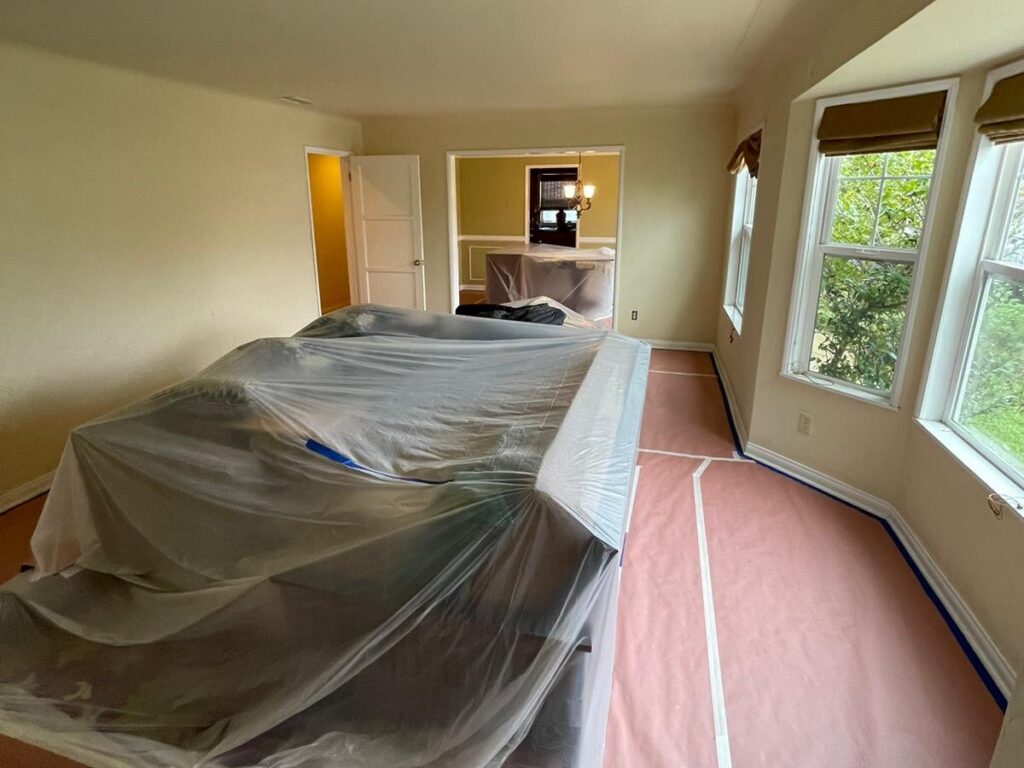
To prepare your home for interior painting, remove wall art and fragile items, empty bookshelves, move light furniture toward the center of the room, and make sure the crew can reach the surfaces in the written scope. Confirm in advance whether moving heavy furniture is included. Your painters should handle the technical side: floor protection, masking, outlet covers, surface preparation, paint application, and cleanup.
I am Justin Brown, founder and lead estimator at J Brown Painting. Most of the San Diego homes we paint are still occupied, so preparation is not about emptying the entire house. It is about separating what the homeowner can safely handle from what the painting crew should be responsible for.
Interior painting preparation checklist
Before the crew arrives, take care of the items that are personal, fragile, or time-consuming to sort:
- Remove pictures, artwork, mirrors, and other wall decor.
- Move fragile objects, electronics, lamps, and small decor out of the work area.
- Empty bookshelves and clear the tops of dressers, tables, and counters.
- Move light furniture toward the center of the room, leaving working space around the walls.
- Confirm which rooms and surfaces are included: walls, ceilings, doors and jambs, baseboards, closets, or cabinets.
- Point out cracks, holes, loose paint, stains, and other repairs before the final scope is approved.
- Ask whether moving large or heavy furniture is included in the estimate.
About 95% of our customers move the furniture themselves because it keeps that labor out of the quote. If you would rather have us handle it, tell us during the estimate so it can be planned and priced instead of becoming a surprise on the first morning.
What the painters should protect
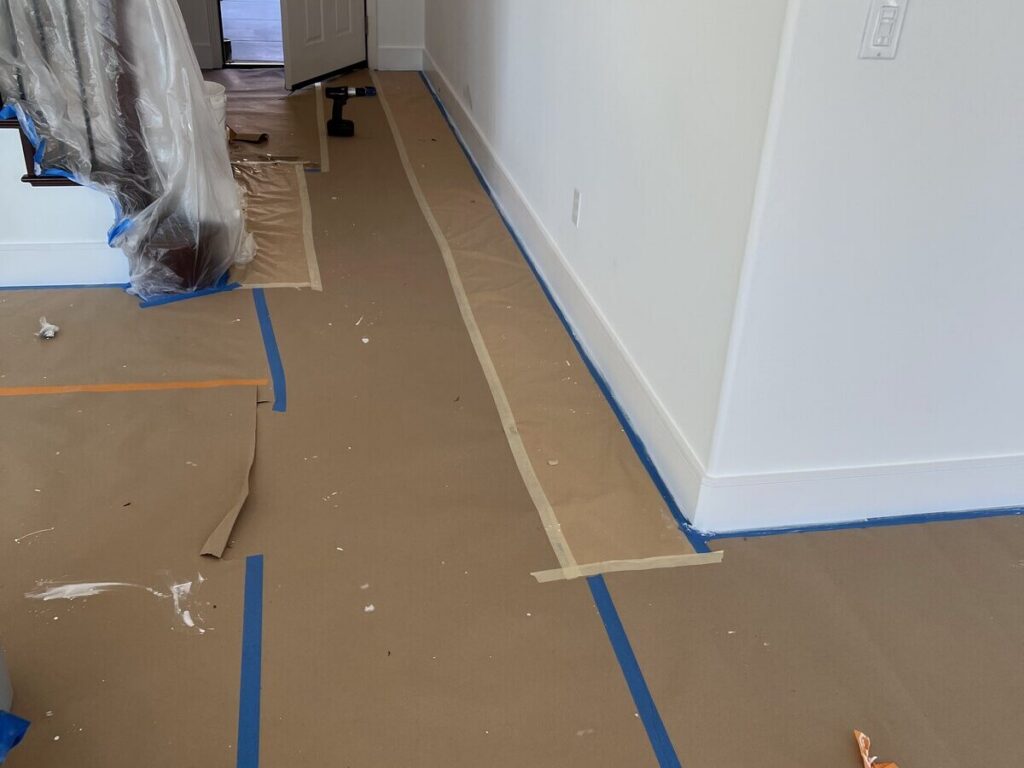
Once the room is ready, protection becomes the crew’s job. The first thing we do is cover the walking surface with red rosin construction paper. It is heavier than ordinary paper and made to be walked on. We tape it down with a tape selected for the flooring so the protection stays in place without pulling up the existing finish.
We also train painters to lift ladders instead of dragging them across the floor. On shorter step ladders, we may protect the feet with clean rags as an additional barrier against scratches. These are small details, but they are part of protecting the home before production starts.
Furniture moved to the center of the room is covered completely with painter’s plastic. We prefer plastic for this use because it can be taped down. A loose canvas cover can shift or move air when someone walks past it; taped plastic stays around the furniture and helps keep roller splatter off the upholstery and finished surfaces.
The crew should also mask anything near the work that is not being painted, including windows, light fixtures, and other finished surfaces. When ceilings are part of the job, the protection below them matters even more.
What should come off the walls before painting
Homeowners should remove personal wall items because they know what is fragile and where it belongs. Put pictures, artwork, clocks, and mirrors somewhere they cannot be stepped on or hidden under other coverings. Small valuables should leave the room entirely.
Outlet and switch-plate covers are different. We remove those as part of the painting process. Cutting around a cover can leave a visible brush outline, and painting over it is worse. Removing the plate gives the wall a clean finish and lets the cover go back onto a properly painted surface.
Decide the repair scope before the room is covered
Nail holes and minor surface defects are routine prep. Larger cracks, failed drywall, water-damaged areas, damaged corner bead, or texture repairs are a different scope. Show those conditions during the estimate and make sure the written proposal says what will be repaired, primed, and repainted.
This distinction matters because the phrase “wall prep” can mean very different things. If a damaged section needs to be cut out, backed, taped, coated with joint compound, textured, primed, and painted, it should not be treated like a nail hole. Our guide to drywall repair before painting in San Diego explains that process in more detail.
How professional interior preparation continues
After the room and floors are protected, we fill the nail holes included in the scope and lightly scuff doors, baseboards, and other trim where needed for adhesion. Existing coatings also matter. If we find oil-based paint on doors or trim, we do not put a water-based finish directly over it; that transition needs an appropriate bonding primer or the new finish can chip and peel later.
The estimate should identify the preparation that is actually included. If caulking, drywall repair, extensive sanding, stain blocking, or a special primer is needed, get that work in writing rather than assuming it is hidden inside the word “paint.”
The order of work inside an occupied home
When ceilings are included, the general order is top to bottom: ceilings first, then walls, doors and jambs, and baseboards. That does not mean every ceiling or every wall has to be worked on at once. In an occupied home, we can sequence rooms around how the household needs to use them.
Roughly 60% to 70% of our interior projects happen while the customer is still living in the home. If someone needs a bedroom that evening, for example, we can often organize the work so both wall coats in that room are completed the same day. If a home office is in use, the crew can work in another area first.
For the interior work we typically perform, we are usually brushing and rolling rather than spraying. We also use very-low-VOC interior coatings and ventilate the work area. The exact sequence still depends on the scope, products, drying conditions, and how many surfaces are being painted.
Why cutting and rolling technique matters
Protection gets the room ready; technique determines how the finish looks. We use a brush to cut the edges where a wall meets the ceiling, baseboard, trim, or a different wall color. Ideally, the first rolled coat follows while that cut line is still wet so the brushed perimeter blends into the rolled field.
When rolling, each pass overlaps the previous one rather than leaving separate start-and-stop bands. Clean cut lines, an even finish, and paint that stays off the ceiling and trim are some of the first things a homeowner notices after the coverings come off.
Preparation warning signs
A lower price is not automatically a problem, but the written scope should explain how the home will be protected and what surface preparation is included. Watch for these gaps:
- No floor-protection method is described.
- Loose drop cloths are the only barrier along the walls and traffic paths.
- The quote says “prep and paint” without naming repairs, sanding, caulking, or primer.
- Outlet covers will be painted around instead of removed.
- Doors and trim will be recoated without checking the existing finish or scuffing for adhesion.
- The estimate does not say who moves furniture or removes wall items.
If you need to adjust the budget, reduce the scope rather than making protection or preparation vague. Our article on lowering an interior painting quote in San Diego explains how separate line items let you choose walls, ceilings, doors, baseboards, and closets without quietly lowering the quality of the work that remains.
Interior painting preparation FAQ
Do I need to move all furniture before painters arrive?
No. In most occupied homes, customers move light furniture toward the center of the room and remove smaller items. We then cover the grouped furniture with taped painter’s plastic. If large or heavy pieces need to be moved by the crew, include that in the estimate so enough people and time are planned.
Who should protect the floors before interior painting?
The painting crew should be responsible for the professional floor-protection system. At J Brown Painting, we roll out red rosin construction paper, secure it with tape selected for the floor, and lift ladders instead of dragging them. The homeowner typically clears personal items and provides reasonable access; the crew handles the masking system.
Should outlet and switch covers be removed before painting?
Yes. We remove them as part of the work instead of cutting around them. This avoids visible brush marks around the plate and keeps paint off the cover. The covers go back after the wall finish is complete.
Can I stay in my house during interior painting?
Usually, yes. Roughly 60% to 70% of our interior projects are completed while the customer is living in the home. The crew can sequence rooms around bedrooms and home offices, and ventilation and the selected products are discussed before work begins. Your exact plan depends on the size and scope of the project.
What should be included in interior paint preparation?
The estimate should identify protection, masking, included repairs, nail-hole filling, sanding or scuffing, caulking, primer where needed, and cleanup. It should also say which rooms and surfaces are being painted and who is responsible for moving furniture and removing wall decor. Specific language is more useful than one broad line that says “prep.”
A prepared room starts with a clear scope
The best first day is uneventful: the personal items are out of the way, the crew knows which surfaces are included, the floor and furniture are protected, and everyone agrees on the repairs before a can of paint is opened.
If you are planning an occupied-home repaint, see our residential interior painting service in San Diego or request a written estimate. We can separate the scope into clear line items and spell out the preparation before the work begins.