When should you stain a cedar deck?
September 18, 2020What power do HOAs have over my house color?
October 16, 2020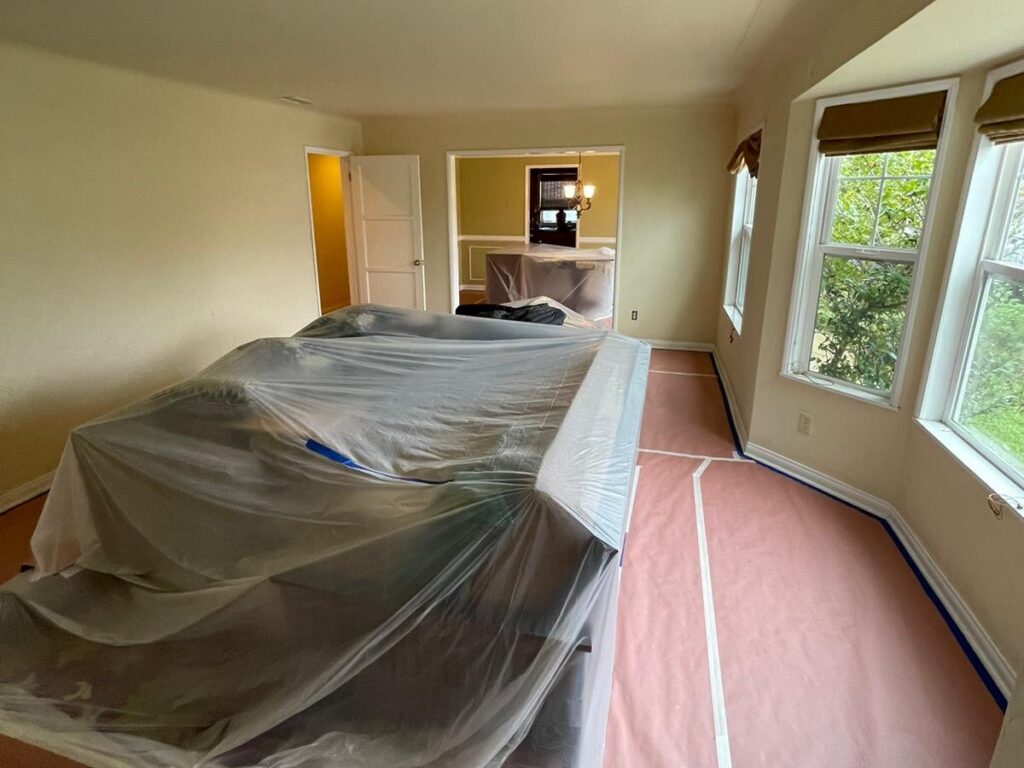
Paint may feel dry within hours and still need much longer to reach its intended hardness and resistance. The answer to “How long does paint take to dry and cure?” depends on the product, conditions, and what you want to do next. Applying another coat, closing a newly painted door, and washing a wall are three different decisions.
For a homeowner, that distinction is more useful than a single countdown. You need to know when the crew can continue, when you can use the space, and how to avoid damaging the finish after the painting itself is complete.
I plan residential interior work around the way people use their homes. Drying and care instructions belong in that plan—not as an afterthought when the last coat goes on.
Dry to the touch is not the same as fully cured
“Dry” is often used casually to mean that the surface no longer feels wet. Curing describes the coating developing its intended performance. A surface can pass the first milestone before it is ready for rubbing, washing, or repeated contact.
| Milestone | What it tells you | What it does not tell you |
|---|---|---|
| Touch-dry | The surface has reached the product’s touch-dry stage. | It is not automatic permission to scrub it or press objects against it. |
| Ready to recoat | The specified interval before the next coating stage has been met under suitable conditions. | The whole finish is not necessarily cured or ready for daily use. |
| Ready for handling or use | The finish can be handled or put into the stated level of service. | It may still need gentler treatment than a mature coating. |
| Cured / ready for cleaning | The product has developed the relevant performance, with cleaning allowed as specified. | It still is not scratch-proof, and cleaning instructions still apply. |
Look for the actual instruction you need. A recoat time printed on a can is not a wall-washing schedule, and a fast-drying primer does not set the cure time of the finish applied over it.
How many hours or days should you allow?
As a general illustration, Benjamin Moore’s drying guidance describes some acrylic paints drying in about an hour and typically taking two to three weeks to cure. That illustrates the size of the gap; it is not a timetable for every wall paint or for the products on your project.
A product-specific example makes the distinction clearer. Rust-Oleum’s B-I-N Shellac technical data sheet lists touch-dry at 20 minutes, recoating at 45 minutes, and full adhesion and hardness in one to three days at 70–80°F and 50% relative humidity. Those are primer milestones—not permission to treat a completed cabinet finish as fully cured in three days.
For your job, identify the wall paint, trim enamel, cabinet coating, and any primer separately. Ask for the relevant label or technical data sheet. If the manufacturer does not state the care milestone you need, ask the painter or manufacturer rather than borrowing a number from an unrelated coating.
Why drying time changes from room to room
Temperature, humidity, airflow, and how much coating was applied affect drying. A product’s published timing assumes particular conditions; it is not a guarantee for every room. Benjamin Moore’s guidance also cautions against forcing drying with heaters or heat guns. A rushed drying shortcut is not a substitute for following the product instructions.
For a San Diego home, use the conditions inside the work area rather than an assumption that the weather is always warm and dry. A closed room and a well-ventilated room may behave differently even in the same house. Keep conditions within the manufacturer’s requirements.
Do not apply the next coat simply because the first one looks dry. The required interval still matters. If the schedule depends on an unusually fast turnaround, clarify which coating is being used and how the painter will allow for conditions that extend the wait.
When can you move furniture back?
Separate returning furniture to the room from placing it against a newly painted surface. A chair can be usable without its back rubbing on a fresh wall. Ask when the crew will remove protection, return furniture, and allow normal contact with painted walls and trim.
In my interior process, larger pieces can often be moved toward the center and protected while we work. The room does not always need to be completely emptied, but the approach should be clear in the estimate. Our interior painting preparation guide explains the homeowner’s part before the crew arrives.
For occupied homes, room order is part of the conversation. My usual starting point is working from upstairs down, while adjusting around a bedroom or home office the homeowner needs. That is project planning, not a promise that every room will be usable at a fixed number of hours after painting.

Cabinets, doors, and trim need their own care instructions
Walls are not the only surfaces to consider. A cabinet door is repeatedly handled; a drawer front gets pulled; a door edge meets its frame. Ask about handling and contact as well as drying between coats.
For cabinet projects, I describe removing the doors, degreasing, preparing the surface, priming with B-I-N Shellac, and applying the cabinet finish. That sequence does not make the primer’s drying time interchangeable with the topcoat’s handling time.
Before using newly painted cabinets normally, get instructions for door and drawer use, hardware, bumpers, and cleaning. Avoid assuming the kitchen is ready for every kind of use just because the doors have been reinstalled. For the broader scope, see our cabinet painting service.
If an older cabinet finish is already peeling, waiting longer is not automatically the answer. Damage to an established coating needs a different assessment. See normal cabinet wear versus paint failure before treating widespread peeling as a simple cure-time issue.
When can you wash a newly painted wall?
Follow the paint’s stated cleaning interval and approved cleaning method. Sherwin-Williams identifies inadequate curing before washing or scrubbing as one reason paint can wear away. A “washable” finish still needs time to develop that resistance.
At handover, keep the product, sheen, and color information with your project records. Ask which cleaner and method are appropriate and when routine cleaning can begin. Do not test readiness by scrubbing a newly painted spot or pressing a fingernail into it.
Does dry paint mean it is safe to sleep in the room?
Drying and curing times describe coating behavior. They are not a universal health or re-entry clearance. Follow the product’s ventilation and safety instructions and agree on room access with the painter. Discuss any particular household needs before work starts rather than relying on “low odor” or a fixed overnight rule.
Questions to settle before the last coat
A useful handover answers more than “When will you finish?” Confirm which products were used, when the final coats were applied, when furniture can return, what contact is permitted, and when cleaning can begin. Different surfaces may have different answers.
For interior painting in San Diego, that discussion helps connect the coating schedule to the way you use the house. Request an estimate and mention any bedroom, office, or move-in date that needs to be considered.
Paint drying and curing FAQ
How long does interior paint take to dry?
The timing depends on the exact product and conditions. Some acrylic paints can dry in about an hour, but that does not establish recoat, handling, cleaning, or full-cure times for your finish. Use the label or technical data sheet for the coating applied.
Is dry-to-the-touch paint fully cured?
No. Touch-dry is an earlier milestone. The coating may still need time to develop its intended hardness and resistance before normal contact or cleaning is appropriate.
Can I put furniture back before the paint fully cures?
Possibly, but room access and contact with fresh paint are different decisions. Confirm the project’s handling instructions and avoid furniture rubbing or pressing against newly painted surfaces before that contact is permitted.
Does every paint need 30 days to cure?
No. Cure times are product-specific and affected by conditions. A universal 30-day rule is not a substitute for the instructions for your wall paint, trim enamel, or cabinet finish.
Can I wash walls as soon as they feel dry?
Do not use touch-dry as permission to wash or scrub. Follow the product’s cleaning interval and approved method so the finish has time to develop the required resistance.
Does a primer’s cure time tell me when cabinets are ready?
No. Primer timing applies to the primer layer. The finish coating has its own recoat, handling, and care requirements, which need to be considered separately.