


Tips for choosing the best exterior paint for your home
November 3, 2020Add a rich indigo color to any space for a modern look
December 29, 2020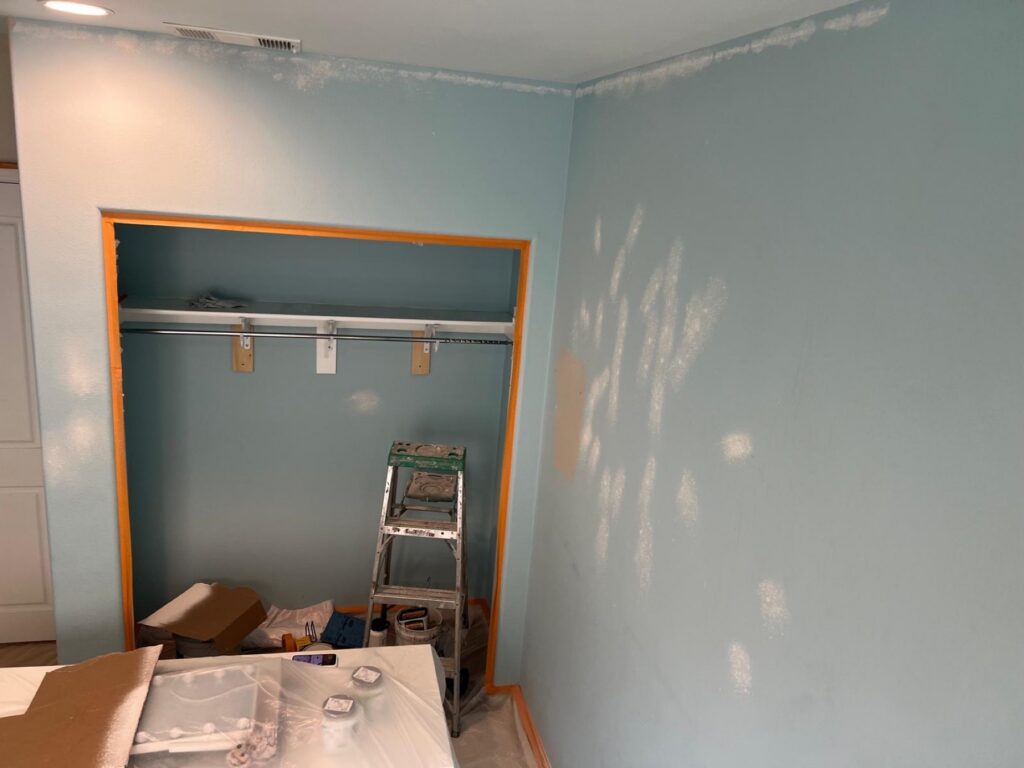
Most people use “drywall patch” and “drywall repair” to mean the same thing. On an estimate, they should not. A few anchor holes need a different scope than a damaged section of ceiling, and the difference affects the materials, the number of steps, and whether the repair disappears after the room is painted.
I am Justin Brown, founder and lead estimator at J Brown Painting. Here is the practical rule I use when I look at drywall damage before an interior painting job.
The short answer: patch localized damage, repair failed drywall
Drywall patching is for localized damage, usually somewhere from about six inches to a foot: nail and anchor holes, small dents, minor cracks, and similar surface defects. The surrounding drywall is still sound. The work is limited to filling or covering the defect, smoothing it, priming it, and painting it.
Drywall repair means part of the damaged board has to come out. New drywall is installed with backing behind it, the seams are taped, multiple coats of joint compound are applied, and the surrounding texture is matched before primer and paint. This is the usual direction for water-damaged material, a large hole, a failing taped joint, damaged corner bead, or a major ceiling crack.
Size is a useful first screen, not the only one. A hole larger than about 12 inches usually moves out of simple patch territory. A smaller area can still require repair if the drywall is wet, soft, loose, or failing at a joint.
When a drywall patch is usually enough
A patch makes sense when the damage is contained and the board around it is solid. Common examples include:
- Nail and picture-hanger holes
- Drywall-anchor holes
- Small dents and shallow gouges
- Minor, localized cracks
- Small holes that can be supported with a mesh drywall patch
The process is straightforward, but every step still shows in the finished paint if it is rushed. We remove anything loose, fill the defect with joint compound or lightweight spackle, let it dry, sand it smooth, spot prime the repair, and then paint. Most small patches can be handled with a putty knife.
The primer step is not optional. Joint compound absorbs paint differently than the painted wall around it. Painting directly over an unprimed patch can leave a dull or uneven-looking spot even when the surface felt smooth before the paint went on.
Five signs you need a drywall repair, not a surface patch
1. The hole is larger than about 12 inches
Once the opening is large, spreading compound over it is not the right structure. The damaged section is cut back, backing is added so the replacement piece has something solid to attach to, and a new piece of drywall is installed.
2. The drywall has water damage
Water damage is a different condition from a clean dent or nail hole. If the board itself is damaged, covering the face does not restore it. The affected material may need to be removed so the repair can start from sound drywall.
3. A taped joint is failing
If a crack follows a seam and you can see the drywall tape lifting or failing, filling the visible line alone is not enough. The failed joint has to be opened up and rebuilt with tape and multiple coats of joint compound.
4. The corner bead is missing or broken
The outside corner of a wall has a formed edge called corner bead. When chunks are missing, the repair has to restore that edge before it can be finished smooth. Treating it like a shallow wall dent usually leaves a weak or visibly uneven corner.
5. There is a large settling crack in the ceiling
We often see these around ceiling fans or near the corners of a house. A large ceiling crack can involve more than the surface coat, so it needs to be inspected before anyone simply fills and paints the line.
What a full drywall repair involves
A proper repair is a sequence, not one thick application of compound:
- Cut out the damaged drywall until the opening reaches sound material.
- Install backing inside the opening so the replacement piece has a secure attachment point.
- Fit and fasten the new drywall.
- Tape the seams.
- Apply multiple coats of joint compound, allowing each stage to set before the next.
- Sand the repair smooth.
- Match the surrounding wall or ceiling texture.
- Prime the repaired area with PVA primer.
- Paint the repaired surface.
Drywall compound is available in different setting times, including 5-, 20-, and 60-minute products. The right one depends on the size and conditions of the repair. Faster is not automatically better; the material has to fit the job and give the person applying it enough working time.

Texture matching is what makes the repair disappear
A repair can be flat and solid and still look obvious after painting if the texture is wrong. Small areas can sometimes be matched with an aerosol texture product. Larger areas usually call for a hopper so the texture can be applied over a broader section and blended into the existing surface.
This matters most in side light and on ceilings. Paint does not hide a texture mismatch; it often makes the difference easier to see. The repair should look consistent before the finish coat goes on.
Drywall repair should happen before the painting estimate is finalized
If you are painting a room, point out every crack, soft area, hole, and damaged corner during the estimate. Drywall repair is a separate scope from routine nail-hole filling. Getting that distinction into the estimate gives you a fair comparison between contractors and avoids treating a real repair as if it were ordinary paint prep.
A useful estimate should tell you:
- Which areas are simple patches and which require new drywall
- Whether texture matching is included
- Whether spot priming is included before paint
- Which walls or ceilings will be repainted after the repair
Drywall patch vs. repair FAQ
Can I patch a hole larger than 12 inches?
About 12 inches is the practical line where I usually stop thinking “small patch” and start planning a repair with backing and a new piece of drywall. The condition of the surrounding board matters too, so size alone does not make the final decision.
Does every drywall crack need a full repair?
No. A minor localized crack may only need patching. A large ceiling crack, a crack following a visibly failing taped joint, or damage involving the corner bead calls for a closer inspection and usually a more complete repair.
Can you paint directly over joint compound?
It should be primed first. We sand the compound smooth, spot prime a small patch, or use PVA primer over a larger repaired area, and then paint. Priming helps the repaired area accept paint more evenly.
Why can I still see a drywall patch after painting?
The usual visible differences are an edge that was not sanded or feathered smoothly, texture that does not match the surrounding surface, or compound that was painted without being primed. Lighting across a wall or ceiling can reveal all three.
Do painters handle drywall repair before painting?
J Brown Painting handles both small drywall patches and full drywall repairs as part of a clearly written painting scope. If you are comparing estimates, make sure each contractor is pricing the same level of repair rather than using one vague line for all “wall prep.”
Start with the condition, not the paint color
The cleanest result comes from deciding what the wall needs before choosing how to finish it. If the drywall is sound and the damage is small, patch it. If the board has failed, replace the damaged section, rebuild the seams, match the texture, prime it, and only then paint.
If you are not sure which scope you are looking at, see how we handle drywall repair before painting in San Diego. For a larger room or whole-home project, our interior painting service explains what else should be included in the work.


