What Order Should You Paint Rooms in a House You’re Living In?
November 16, 2026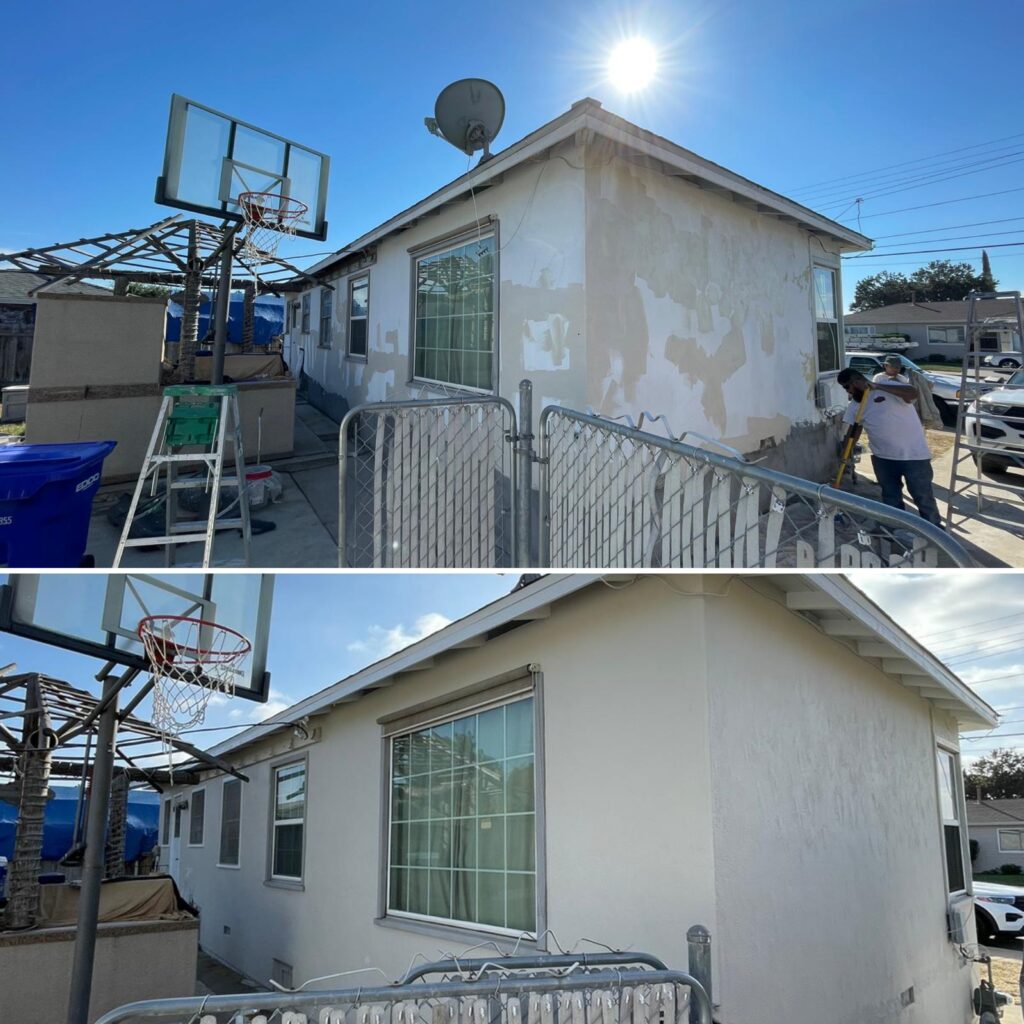
The same stucco wall during preparation and after painting, viewed from a similar angle.
Ask the estimator to show you where the paint will stop. A repair in the middle of a sun-facing wall may blend better when we paint to the next corner. A small patch on a narrow section behind a downspout may be fine with a touch-up. At the walkthrough, show us where you’ll usually see the wall from. That helps us price a finish you’ll be happy with from that spot.
Look at texture and color separately
A repair can have the right color and still stand out. Fine sand, smooth stucco and a heavy lace texture catch sunlight differently. If a patch is flatter or rougher than the area around it, the difference may show even with a good color match. Look at the wall from the sidewalk or patio and from a shallow angle. Before you accept the scope, ask how the crew plans to blend the texture and what difference may remain.
Existing paint also changes over time. Even if you have the original can, the exposed wall may have faded or changed sheen. On a broad wall with no breaks, a fresh spot may read as a square or oval. At a corner or change in material, the eye is already expecting a break, which gives the new finish a clearer place to end.
Compare the areas you could paint
| Finish area | When to consider it |
|---|---|
| Repair area only | The patch is small, tucked away, or the existing finish is in good condition and blends acceptably. |
| Wall from break to break | The repair is in a visible area or the surrounding paint looks noticeably faded. Ask the estimator to identify the start and stop points. |
| Larger exterior repaint | Several sides need attention, or the broader finish is already failing and you want one scope for the repairs and paint. |
Check that each option describes the repair separately from the paint. Bare cured repair areas need the appropriate masonry primer before finish paint. If sprinklers, soil contact or a leak are keeping the wall wet, discuss that before deciding on the paint boundary. A wider coat of paint won’t solve a continuing moisture problem.
Show the wall in context
Send one wide photo from corner to corner and one close-up of the damaged area. Tell the estimator which view matters most to you: the street, the front entry, or the patio you use every day. In the estimate, ask whether the proposed finish covers the patch, the whole wall, or additional sides. That gives you something concrete to compare when two quotes describe the same repair but include different areas of paint.
Questions about painting after a stucco patch
Can I use leftover paint from the original job?
Bring the can or the product and color information to the estimate. The old paint on the wall may have faded, and the leftover paint needs to be in usable condition. Check the blend after a small test area dries.
Does painting the entire wall hide a texture mismatch?
Painting the wall can give it a more consistent color and sheen. A texture difference may still cast shadows, especially when the sun hits the wall from the side. Ask how the repair texture will be blended before paint goes on.
How soon can a new stucco repair be painted?
Ask the crew what the repair material and primer require. Cure and drying time vary with the materials, the depth of the repair and site conditions. Discuss the timing before you plan around a paint date.
Read Justin Brown’s guide to stucco repair and painting if you’re still deciding whether the surface needs a patch or a deeper repair. For the actual finish scope, request a stucco repair and painting estimate.