Stucco Painting & Repair in San Diego: A Contractor’s Guide
August 28, 2026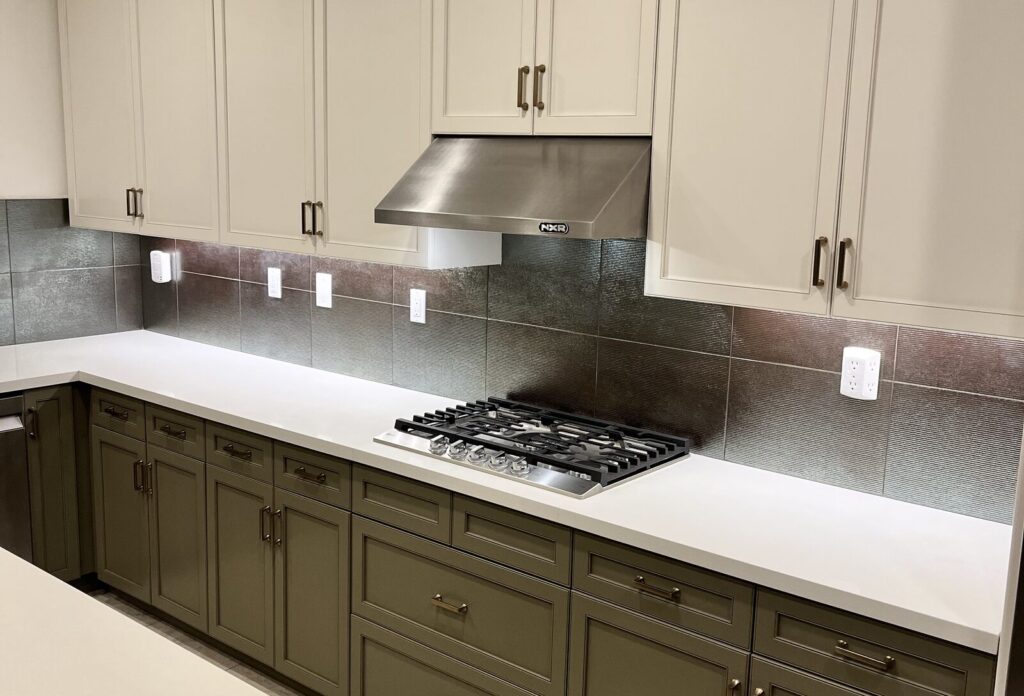
I am Justin Brown, founder and lead estimator at J Brown Painting, and I have been estimating painting work in San Diego for 16 years. Cabinets are the job homeowners get wrong most often, and it is almost never because they picked a bad color. It is because nobody explained what they were actually buying.
So this is the practical side of a kitchen cabinet painting job: what it costs and why, what the work should actually involve, how long the finish holds up, and what makes one fail early.
The colors, and whether to paint or stain, come after that. They are the easy part.
Kitchen cabinet painting cost in San Diego
For a small-to-standard kitchen, my planning range is $4,500 to $6,250; for a large kitchen, it is $6,250 to $9,000. Those ranges refer to the door and drawer counts below, not kitchen floor area. They are a starting point, not a price for every kitchen. If you are ready to discuss your own cabinets, see our cabinet painting service and estimate form.
Cabinet pricing is not driven by the square footage of your kitchen. It is driven by how many pieces have to come off, get prepped, primed, sprayed, and rehung. Count your doors and your drawers. That is the number that matters.
- Small through standard kitchen, from around 10 doors and 10 drawers up to around 20 doors and 10 drawers: roughly $4,500 to $6,250.
- Large kitchen, 40 or more doors and 20 or more drawers: roughly $6,250 to $9,000.
More pieces than that and it climbs from there. These are rough planning ranges, not a quote. What you pay depends on the condition of your cabinets, your layout, and what we find when we walk the kitchen.
Why two cabinet painting quotes can be so different
When I compare cabinet quotes, I start with the work, not the total. Are both painters counting the same doors and drawer fronts? Are the doors and hardware coming off, or staying in place? Is degreasing included? What primer and cabinet finish are specified, and is the finish sprayed or rolled? A lower number can mean a different scope rather than the same job for less money.
That is why I ask homeowners to count the pieces first and make the preparation explicit. Doors-on painting can be an agreed budget choice. Quietly skipping degreasing or brushing around hinges is a different proposition. Compare those details before deciding which bid is better value.
Legitimate ways to bring the number down
Every once in a while there is simply no space on site to take the doors off. In that case we tape the hinges meticulously, trim the excess with an X-Acto knife, and still spray around them. The taping takes a long time, but you keep the finish.
If the budget is genuinely tight and you do not mind the hinges being painted, we can prime and paint the hinges and leave the doors hung. That is a tradeoff you choose on purpose, and it is very different from a painter quietly brushing around hinges to save an hour.
How kitchen cabinets should be painted, step by step
This is the process, in order. If a bid is dramatically cheaper than the others, it is usually because one of these steps is not in it.
- Take the doors and drawer faces off, and remove all the hardware, both the pulls and all the hinges.
- Label everything, so each door and drawer goes back exactly where it came from.
- Degrease every surface. This is the step that gets skipped most, and it is the one that decides whether the finish sticks. Cabinets carry cooking grease off the stovetop and oils off your fingers, and paint will not bond through that.
- Scuff sand. On relatively smooth cabinets that means 180 grit for the general-purpose scuff and 220 for the final pass. Where there are imperfections to take out first, that is more aggressive work at 120 to 150 grit before you work back up.
- Wipe down with a tack cloth to pull off the sanding dust.
- Prime with an alcohol-based shellac primer. We use BIN shellac, every time. Generic, general-purpose water-based primers have been known to peel on a surface as slick as a cabinet door. There are bonding primers built for the job — Sherwin-Williams Extreme Bonding Primer, a waterborne, urethane-modified acrylic, is marketed as a reliable cabinet primer — but we do not take chances on a kitchen, and BIN has been tried and tested for years.
- Scuff the primer smooth before the finish goes on, at 280 to 320 grit, then tack cloth again.
- Spray two coats of a quality cabinet finish. Products we use include Sherwin-Williams Emerald Urethane, Sherwin-Williams Gallery Series Waterborne Topcoat, and Dunn-Edwards AristoShield. These are different coating systems, not all the same type of enamel; the estimate should identify the actual product. Follow that product’s preparation, application, and recoat instructions. We typically go semi-gloss so the doors wipe clean easily and the film dries hard.
Do that with a fine finish tip and you can come very close to a factory finish at a fraction of what refacing or replacing costs. Most people do not realize that is possible with paint.
Spray or roll kitchen cabinets?
If you want a factory-like finish, spray, using what is called a fine finish tip. A roller cover leaves stipple, a fine texture. The closest thing I can compare it to is orange peel. Some people do not mind it. On a kitchen you look at every day, most people do.
What rolling is not is automatically weaker. With a coating suitable for both methods, preparation and the specified film thickness matter more than the application method alone. Not every cabinet coating can be rolled: Sherwin-Williams Gallery Series, for example, is a spray-applied system. Rolling is simply faster, and less labor costs the homeowner less. That is why we roll lower-visibility cabinets, like hallway cabinets, the uppers above bedroom closets, and sometimes a guest bathroom vanity. Kitchen cabinets are almost always sprayed.
How long do professionally painted cabinets last?
I would rather give you an honest range than a number that sounds good on a website.
Cabinets done by an average contractor, where prep gets rushed, are four to five years if you are lucky. Done with the full process above, degreased, sanded, primed with a shellac primer, and sprayed with a premium cabinet enamel, my experience is 10 to 15 years. When I am sitting with a family whose kitchen gets cooked in every night, I tell them to plan closer to the 10-year end of that. So the honest planning band is 10 to 15 years, and where you land in it has more to do with your kitchen than with the paint. None of that is a guarantee — a surface that gets touched dozens of times a day ages at its own pace.
What moves you inside that range:
- How hard the kitchen gets used. A kitchen cooked in nightly, with kids pulling drawers open, ages faster than one that is not. Wear shows around the handles, pulls, and knobs long before it shows anywhere else.
- Cleaning. Part of why we spec semi-gloss is that it wipes down easily and dries hard, so keeping grease off the doors does not mean scrubbing at the finish.
- Prep. Whether the cabinets were degreased and primed correctly is the single biggest factor, and it is decided before a drop of color goes on.
Normal wear vs. a job that actually failed
Even a top of the line cabinet job shows minor wear. Small chips where fingernails hit. Light scuffs where the trash gets pulled out. A ding where a pot caught the door going in. That is normal wear and tear, not a failed paint job, and it usually means an occasional touch-up around the pulls rather than a repaint.
A failed job looks different. The first sign is peeling paint, or chipping showing up everywhere instead of at the contact points, or water getting into the wood because the coating is not doing its job. That is an adhesion problem, and it traces back to prep almost every time, usually to skipped degreasing or to a general-purpose water-based primer going on a surface it was never meant for.
We get a lot of calls at J Brown Painting to fix cabinets a handyman or another painter already did. Sometimes steps were skipped to hit a lower number, sometimes the person did not know the correct sequence. Either way the homeowner pays twice.
Is painting the right move for your kitchen?
Paint them if you like the door style and just want a different color, the wood is in good shape and the boxes are structurally sound, or you want the best value. A small-to-standard kitchen generally lands around $4,500 to $6,250 to prime and paint, while refacing the same kitchen runs upward of $10,000.
Reface them if you do not like the door style itself, say going from an antiquated raised panel to shaker, or you want to keep seeing the wood grain and texture. Painting hides a lot of both.
Replace them if you do not like the layout and the boxes need to move, or the boxes are no longer structurally sound, from water damage or from being poorly built to begin with.
If you are weighing paint against stain, that is its own decision and I covered it separately in should I paint or stain my cabinets. The short answer is that most of the kitchens I walk have stained cabinets with a clear coat, roughly nine out of ten of those homeowners are asking me to quote painting, and re-staining runs about double a paint job because the stain has to be stripped out of the wood. If you are not sure your cabinets are a candidate for paint at all, see types of cabinets you shouldn’t paint over.
What San Diego homeowners are picking for color
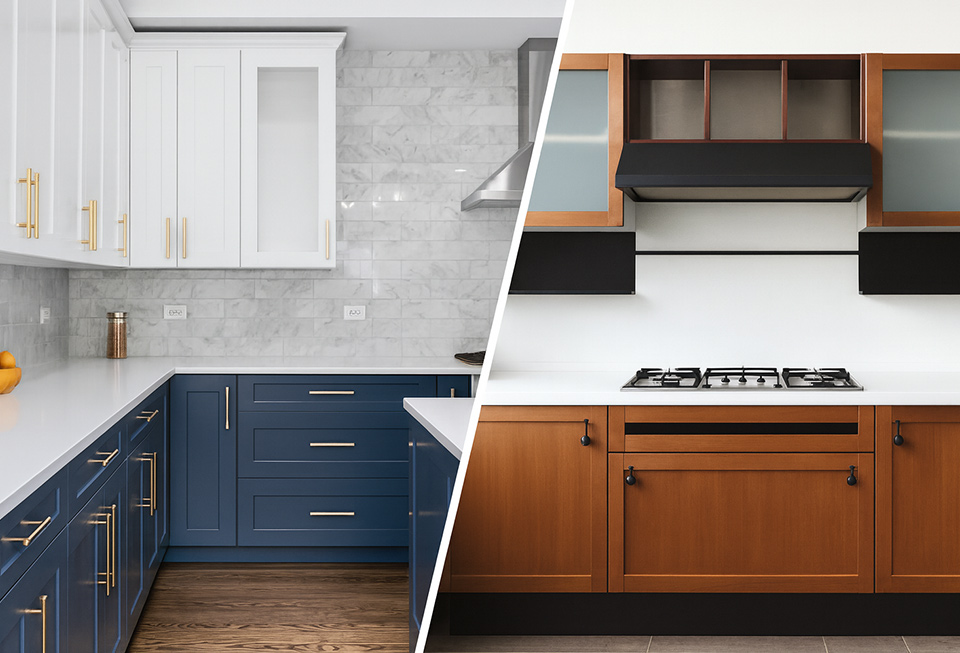
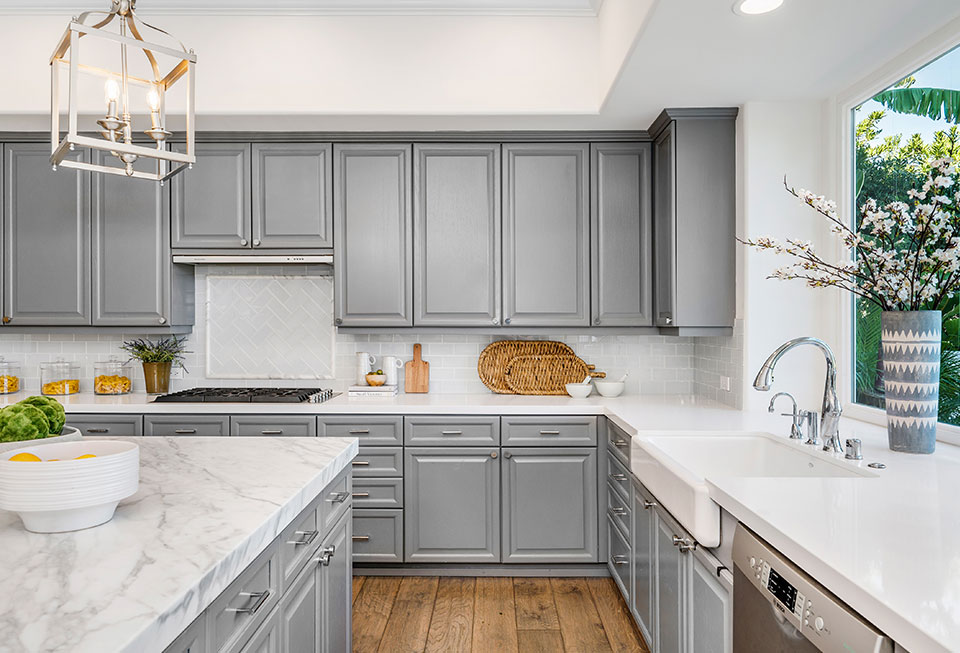
In my estimates the shift is away from bright whites like Sherwin-Williams Pure White and Extra White, toward warmer whites and soft greiges. Greige is gray and beige together. People still want light cabinets, they just do not want the kitchen to feel sterile.
Greek Villa is a bright but warm white. Alabaster is a soft warm white that works really well with quartz and granite countertops, and you want the Sherwin-Williams version specifically, because other companies have an Alabaster and it is not the same color. Accessible Beige pairs well with white quartz, warm wood flooring, and bronze hardware. Natural Linen is a little richer, and we tend to see it in the luxury homes in La Jolla and Rancho Santa Fe.
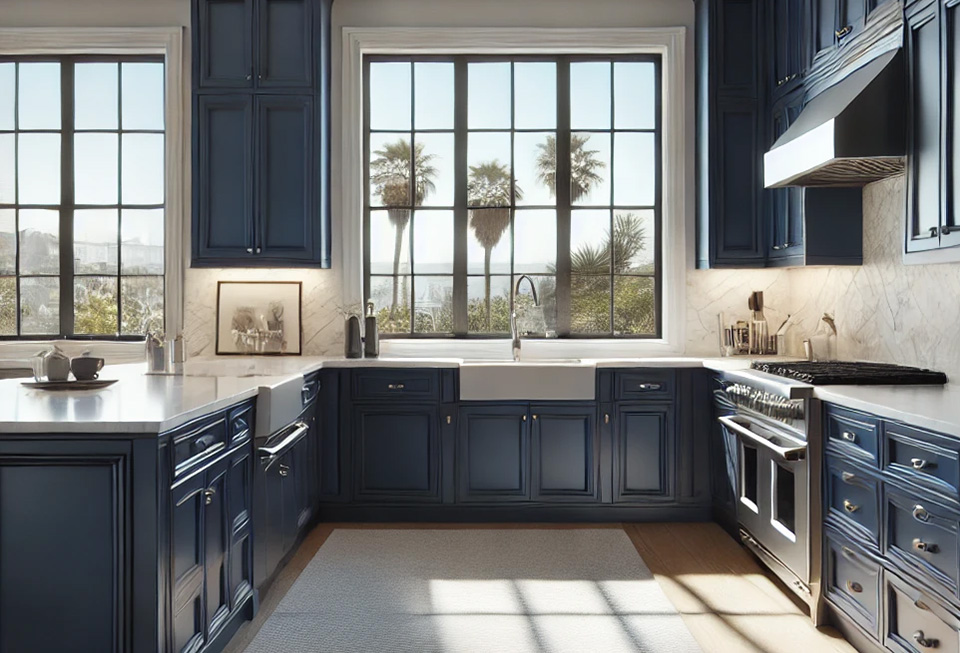
Two-tone kitchens are still going strong, usually a warm white on the uppers with a dark green, gray, or charcoal like Urbane Bronze or Iron Ore below. What is clearly over is cherry wood, dark espresso, and anything yellowy or creamy. For more on where colors are heading, see our cabinet refinishing trends for San Diego homeowners.
How to tell you are hiring a real kitchen cabinet painter
You do not need to know coatings to screen a contractor. Ask specific questions and listen for specific answers.
- “Are you taking the doors off?” The easiest way to cut hours out of a bid is to leave the doors hanging and brush around the hinges. You will see those brush strokes for the life of the job.
- “How are you degreasing?” If degreasing never comes up on its own, that is your answer.
- “What primer are you using?” You want a primer chosen for cabinets specifically, not whatever was already on the shelf. We use an alcohol-based shellac primer, BIN, on every kitchen.
- “Spraying or rolling, and with what tip?” For kitchen cabinets: sprayed, fine finish tip.
- “Are the doors getting labeled?” Doors that go back on the wrong opening do not hang level or close all the way, and drawers are the same story.
Kitchen cabinet painting FAQ
How much does it cost to paint kitchen cabinets in San Diego?
As a planning range, roughly $4,500 to $6,250 for anything from a small kitchen of about 10 doors and 10 drawers up to a standard kitchen of about 20 doors and 10 drawers, and roughly $6,250 to $9,000 for a large kitchen of 40 or more doors and 20 or more drawers. Your actual number depends on condition and layout.
How long do professionally painted cabinets last?
Plan on 10 to 15 years. Full prep with a shellac primer and a sprayed premium enamel is where the upper end comes from, a hard-working family kitchen sits nearer the lower end, and rushed prep can cut it to four or five years if you are lucky. Expect an occasional touch-up around the pulls either way.
Is spraying better than rolling for kitchen cabinets?
For appearance, yes. Spraying with a fine finish tip is how you get a factory-like finish, while a roller leaves a slight orange-peel texture. With a coating suitable for either method, preparation and the specified film thickness matter for durability. Some products, including Gallery Series, are intended for spraying rather than rolling.
Do the doors have to come off to be painted?
For a factory-like finish, yes. If there genuinely is no space on site, the alternative is taping the hinges meticulously and spraying around them. What you do not want is someone brushing around hinges that are still attached.
Why can cabinet painting quotes vary so much?
The door and drawer count, existing condition, doors-off versus doors-on preparation, degreasing, primer, finish product, and spray-versus-roll scope all matter. Compare those details before comparing totals; the cheapest bid may not include the same work.
Is painting cheaper than refacing my kitchen cabinets?
For a small-to-standard kitchen, Justin's painting planning range is $4,500 to $6,250, while refacing the same kitchen can run upward of $10,000. Painting makes sense when the boxes are sound and you like the layout and door style. Refacing is a different option when you want to change the doors themselves. These are planning figures, not a quote for your kitchen.
Before you call anyone
Count your doors and drawers first. That number tells an estimator more than a room measurement does, and it lets you compare quotes on the same basis.
We paint kitchen cabinets across San Diego County, from the coast in Carlsbad and Encinitas out to Rancho Bernardo and Poway, and I am happy to walk your kitchen and tell you honestly whether painting is the right move or whether you would be better off refacing. You can see how we handle kitchen cabinet painting in San Diego from there.