

Drywall Repair Services in San Diego
Drywall Repair in San Diego, From Damage to Finish Paint
Drywall damage does not disappear under a coat of paint. If the board is soft, a taped joint is failing, or a hole needs new backing, paint can make the edge and texture difference even easier to see. J Brown Painting handles drywall patching and repair as part of a clearly written painting scope, so the damaged surface is repaired, primed, and finished without handing the room from one company to another.
The right scope starts with what has failed. A nail hole in otherwise sound drywall is not the same job as a water-damaged section of ceiling. Justin Brown, our founder and lead estimator, uses the condition of the surrounding board—not one generic label—to decide whether an area needs a surface patch or a full repair.
When a patch is enough—and when it is not
A patch is usually appropriate for localized damage such as nail and anchor holes, small dents, shallow gouges, and minor cracks. Loose material is removed, the defect is filled with joint compound or lightweight spackle, then the area is sanded, spot primed, and painted.
A full drywall repair is the better scope when the damaged material itself needs to come out. Common signs include:
- A hole larger than about 12 inches
- Water-damaged, soft, loose, or warped drywall
- A crack where the taped joint is lifting or failing
- Broken or missing corner bead
- A large ceiling crack, often near a fan or at the corner of a room
The 12-inch point is Justin’s practical screen, not a building-code rule. Condition still matters: a smaller wet or failing area may need replacement, while a small defect in solid board may only need patching. For a more detailed decision guide, read drywall patch vs. repair.
Make the repair part of the written estimate
Routine paint preparation and drywall repair are different scopes. Filling ordinary nail holes may belong under prep; cutting out damaged drywall, installing backing, rebuilding seams, matching texture, priming, and repainting should be described separately. A clear estimate lets you compare the same work between contractors and shows which walls or ceilings will be painted after the repair.
If the damage is part of a room or whole-home project, see our interior painting process and how repair work fits into the finished result.

How We Repair Drywall Before Painting
A full repair is a sequence, not one thick layer of compound over a hole. Depending on the damage, the work can include:
- Cutting out failed drywall until the opening reaches sound material
- Installing backing so the replacement piece has a secure attachment point
- Fitting and fastening new drywall
- Taping the seams and applying multiple coats of joint compound
- Sanding and blending the repair into the surrounding surface
- Matching the existing wall or ceiling texture
- Applying PVA primer over new material, then repainting the repaired surface
Texture matching comes before paint
A repair can be flat and solid but still look obvious if its texture does not match the rest of the wall. Small areas can sometimes be blended with an aerosol texture product; larger areas typically require a hopper. The goal is to make the transition consistent before the finish coat goes on—paint does not hide a smooth rectangle inside a textured wall.
Primer prevents the repaired area from flashing
Fresh joint compound absorbs paint differently from the painted surface around it. Small patches are spot primed, while larger repairs receive PVA primer over the new material before paint. Skipping this step can leave a dull or uneven-looking area even when the filling and sanding were done correctly.
J Brown Painting provides drywall repair services in San Diego and nearby communities including Poway, Encinitas, Carlsbad, and Rancho Bernardo. Review examples in our project portfolio, or request a free estimate for a written repair-and-painting scope.
Drywall Repair Gallery
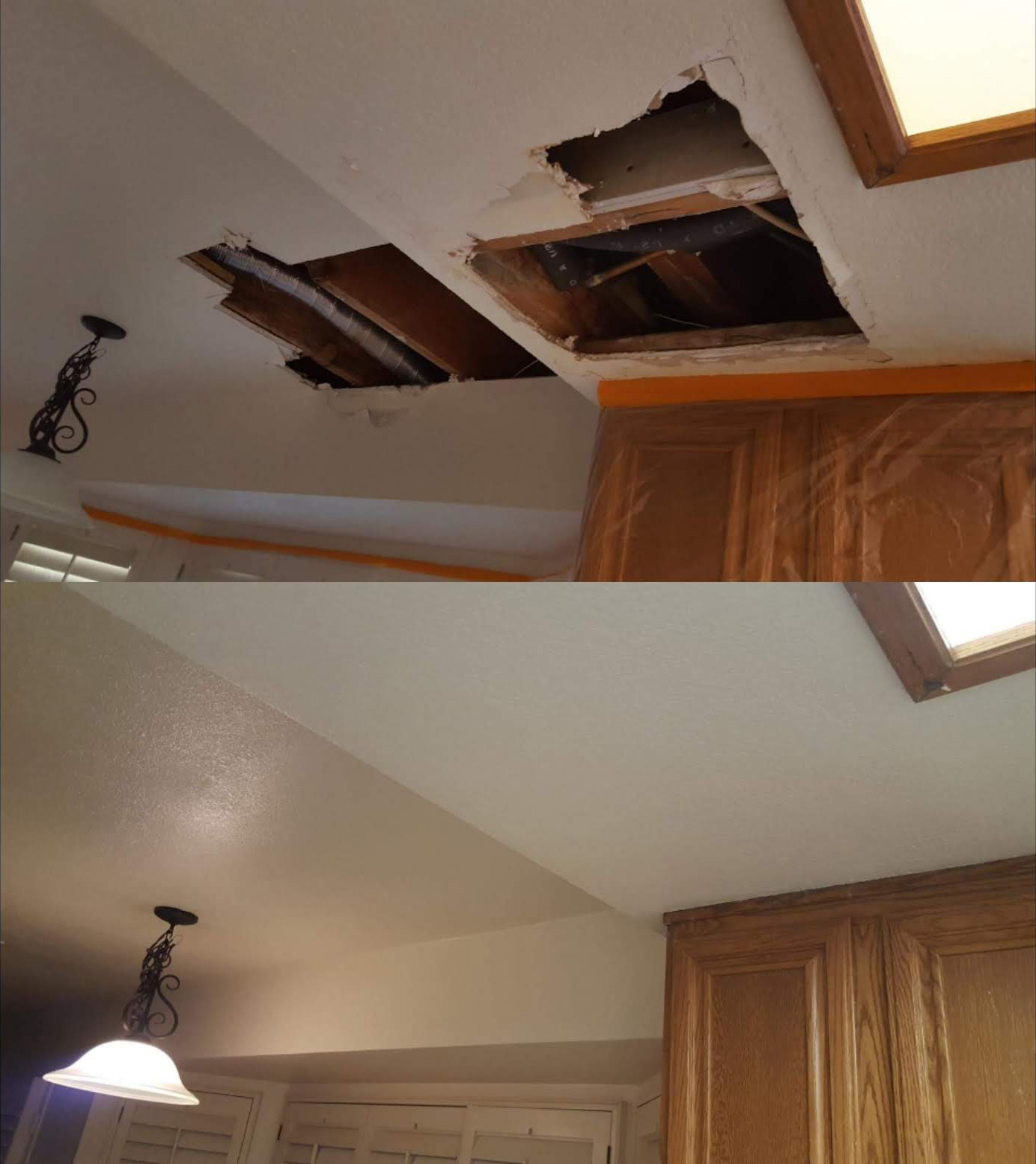
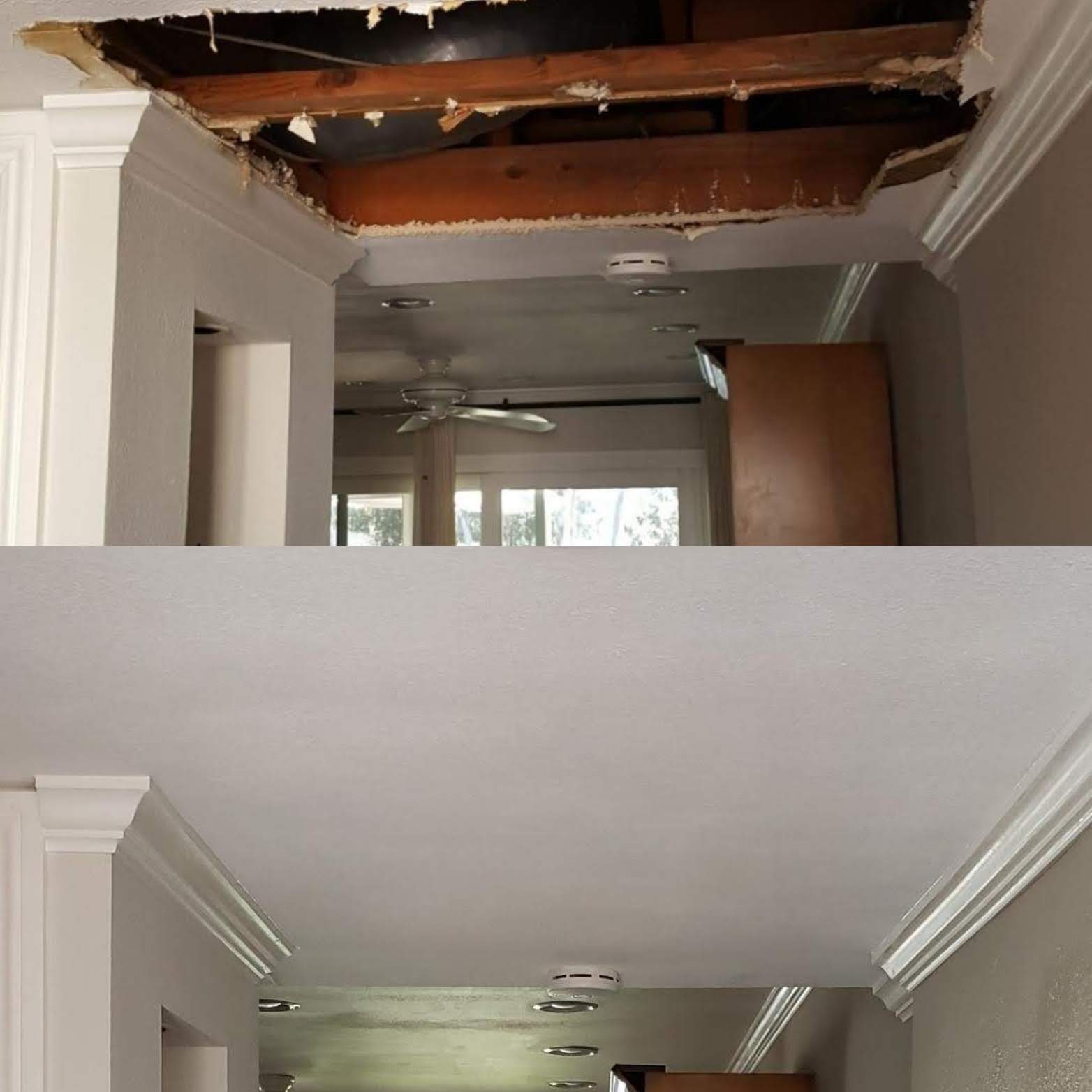
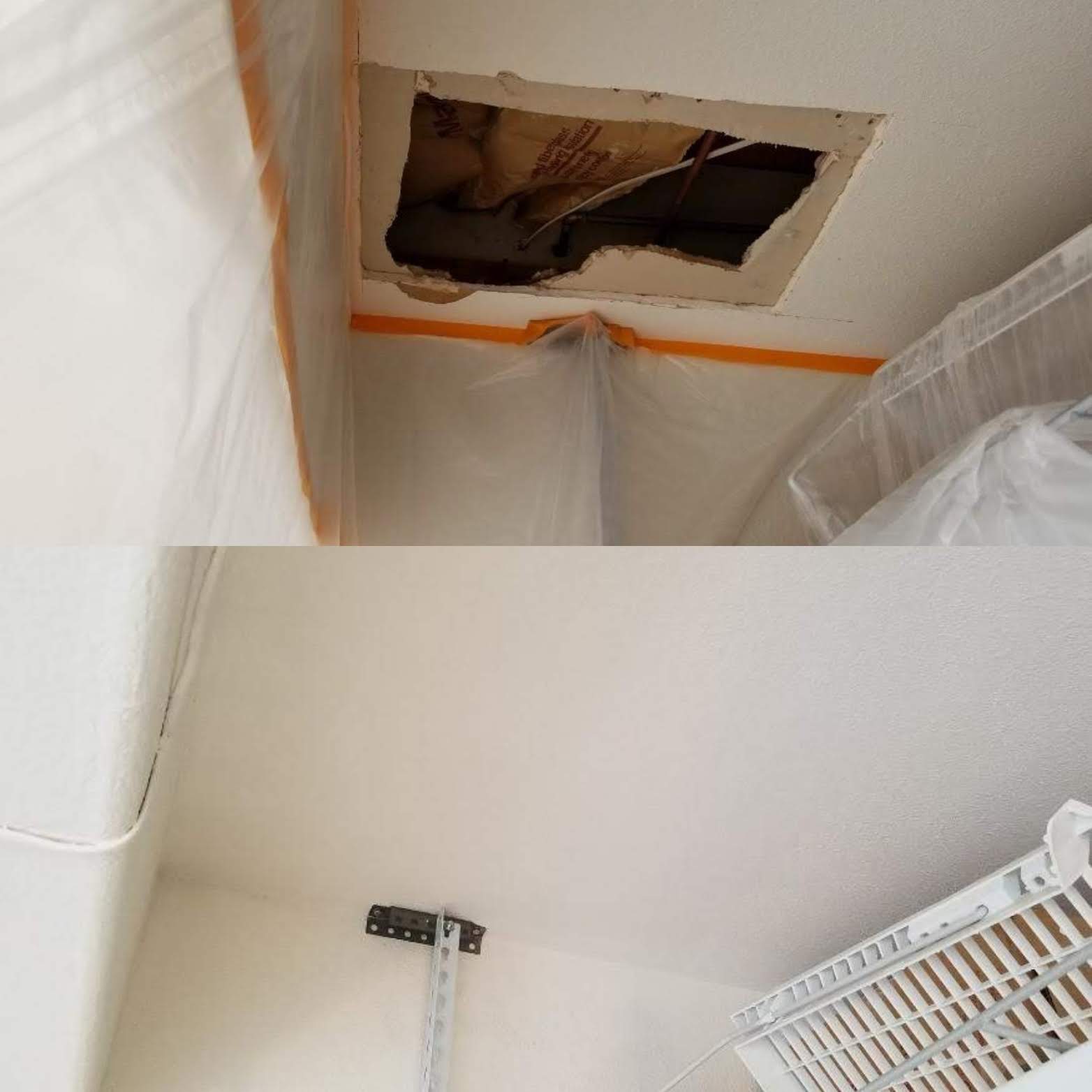
Frequently Asked Questions
A repair is a different job. We cut out the damaged drywall, install backer behind the opening so the new piece has something to attach to, tape the seams with drywall tape, apply several coats of joint compound, match the existing texture, prime and paint. The short version: patching fills the damage, repair replaces it.
Settling cracks in a ceiling are the other common one. Those usually show up around ceiling fans and in the corners of the house, and almost always on the ceiling rather than the walls.
Small dents, nail holes and hairline cracks are patch work.
Matching the existing texture is what keeps a repair from standing out once the paint is on. On a large repair it matters more than the fill itself, because a smooth rectangle in the middle of a textured wall is visible from across the room.
Fresh joint compound is more porous than the painted wall around it, so it takes paint differently. Skipping the primer is how a patch ends up showing through the finished coat even though the filling and sanding were done properly.
Prep normally covers masking, filling nail holes and light sanding. Drywall repair is separate work with its own materials and its own hours. If it is buried inside a prep line you have no way to compare one bid against another, or to decide whether you want that work in the scope at all.
