

Wood Repair and Replacement in San Diego
Soft fascia, rotted trim, and termite-damaged wood need more than a coat of paint. J Brown Painting identifies what can be repaired, what should be spliced, and what needs replacement—then prepares, primes, and paints the finished work.
Exterior Wood Repair Before Painting
Exterior paint protects sound, properly prepared wood. It cannot restore strength to a board that is soft, deeply decayed, badly warped, or unable to hold a fastener. That is why we make the repair-or-replace decision before painting begins.
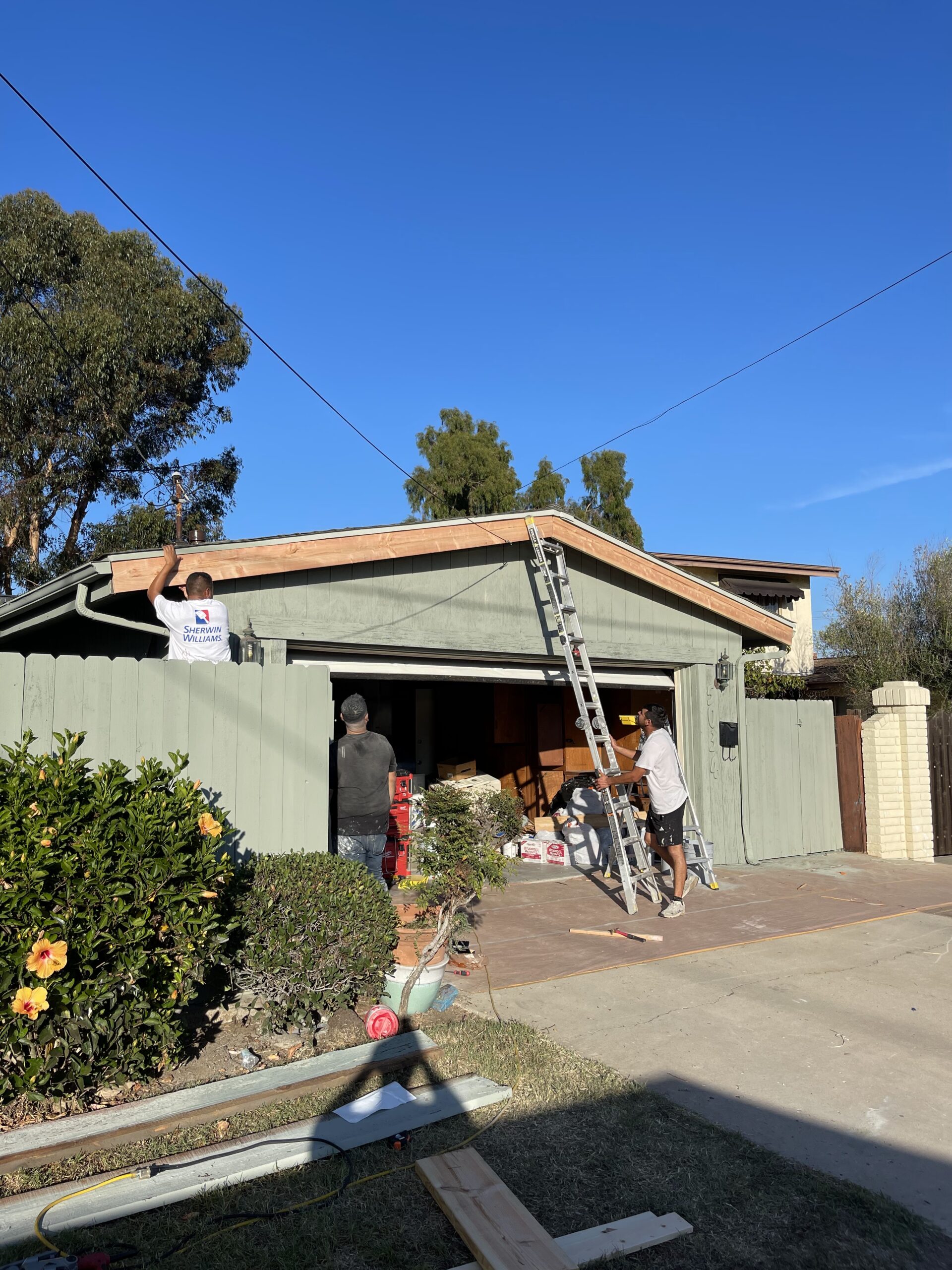
We commonly evaluate fascia, eaves, window and door trim, and other painted exterior wood around San Diego homes. Justin Brown's practical field rule is to look at how much sound wood remains. When a small area is damaged and roughly 80 percent or more of the board is still solid, a localized repair or partial replacement may be appropriate. When more than roughly 20 percent is soft, wet, or rotten—or the damage runs deep—the better scope is usually replacement. This is a field guideline, not a structural standard; the actual recommendation depends on the location and condition of the wood.
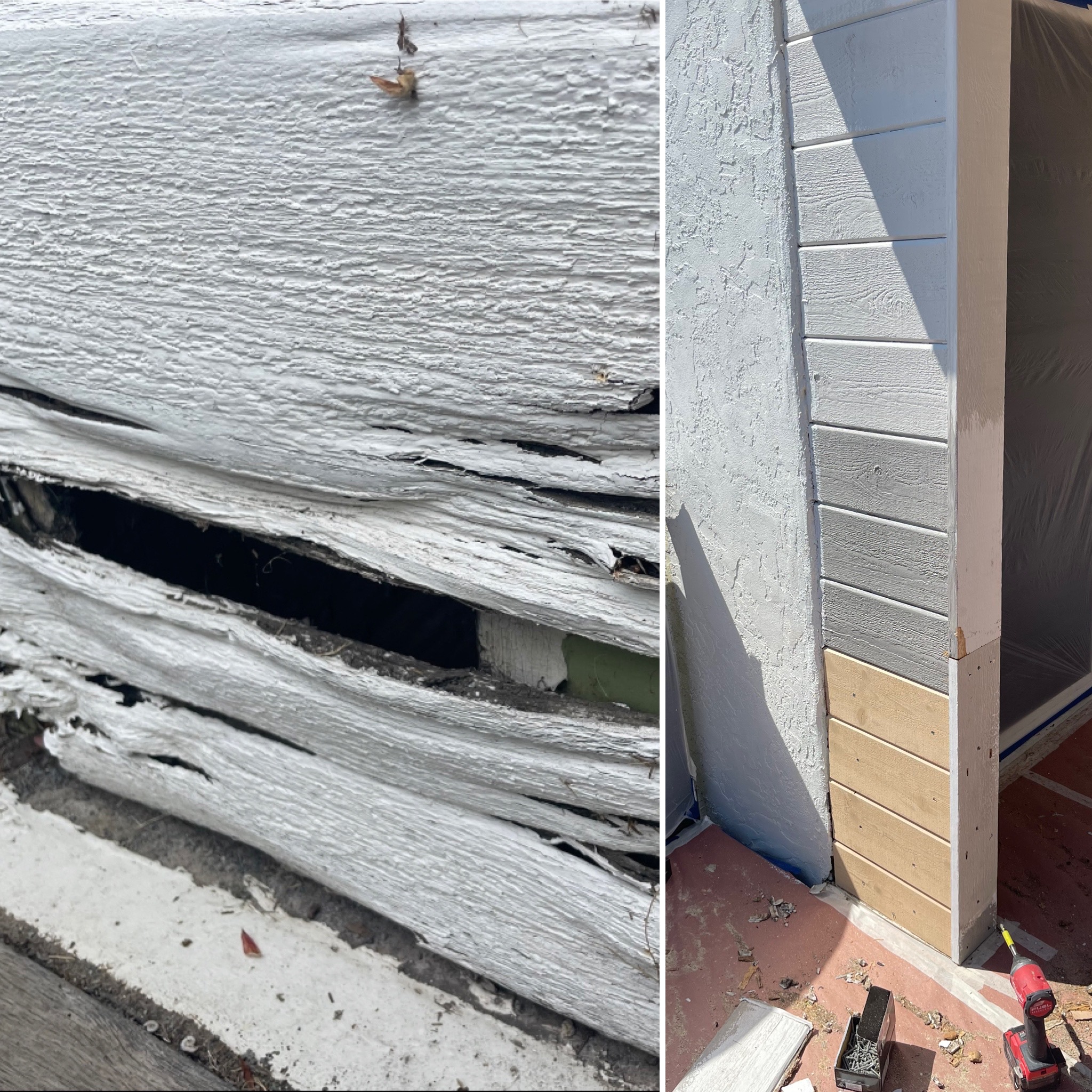
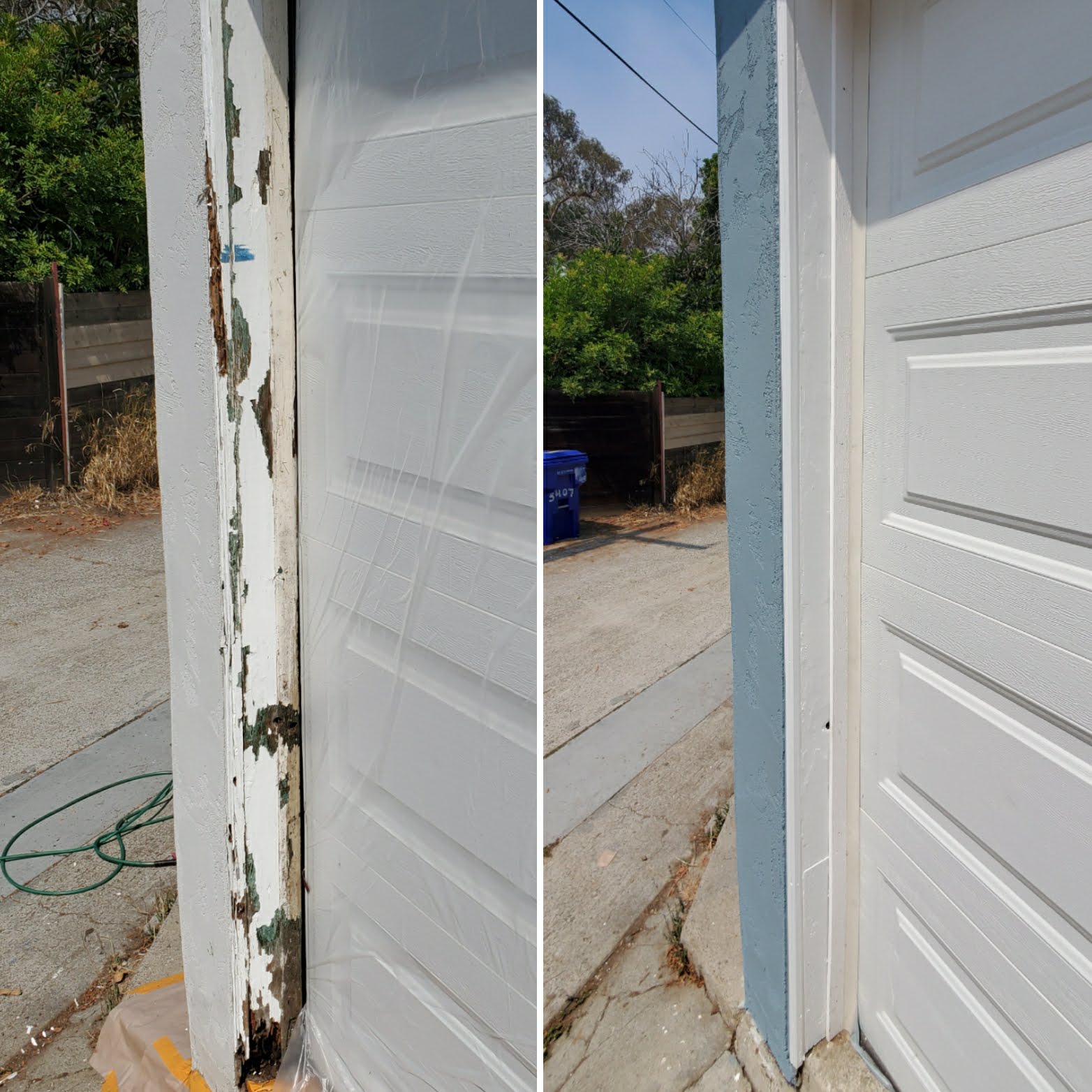
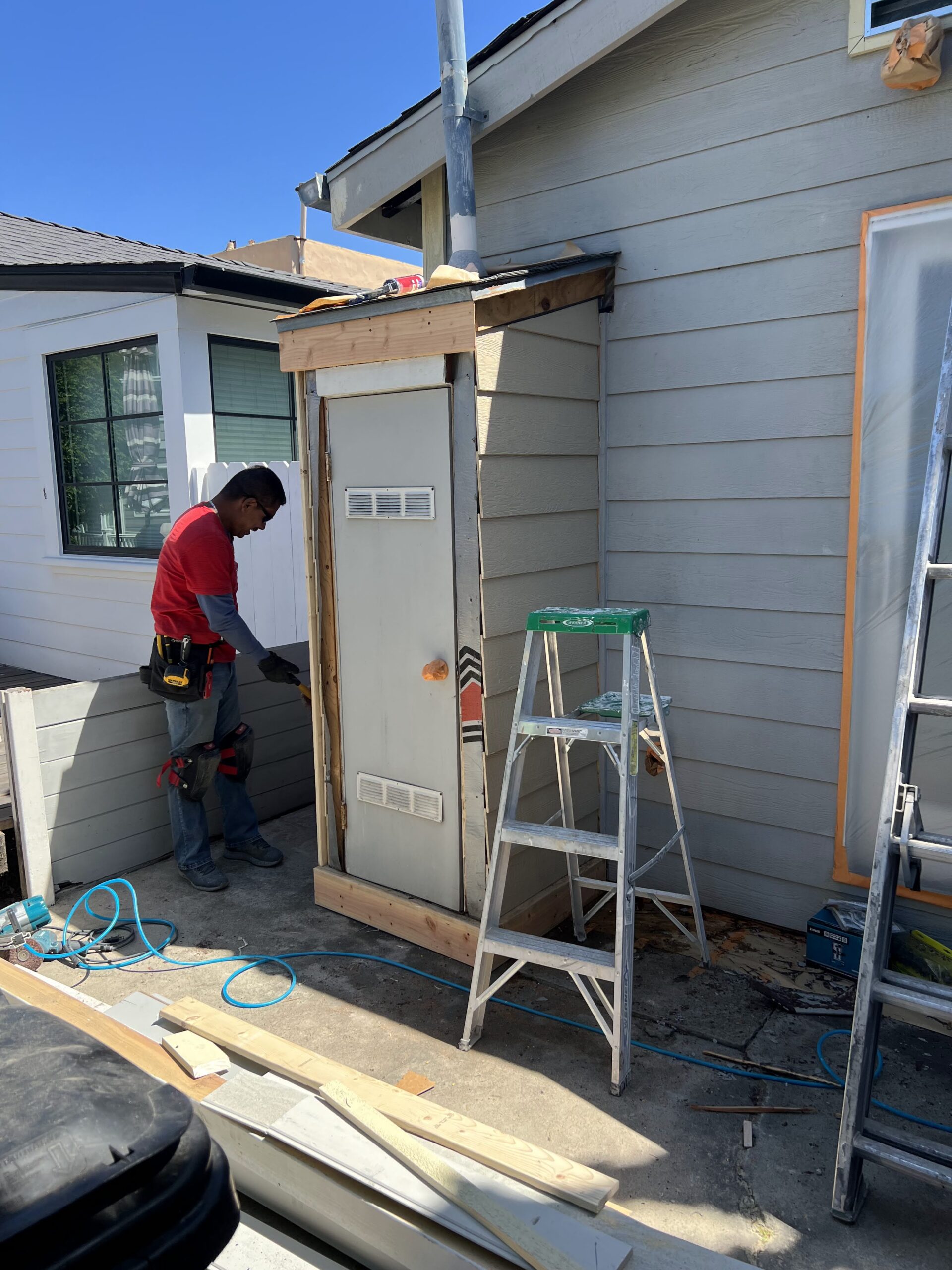
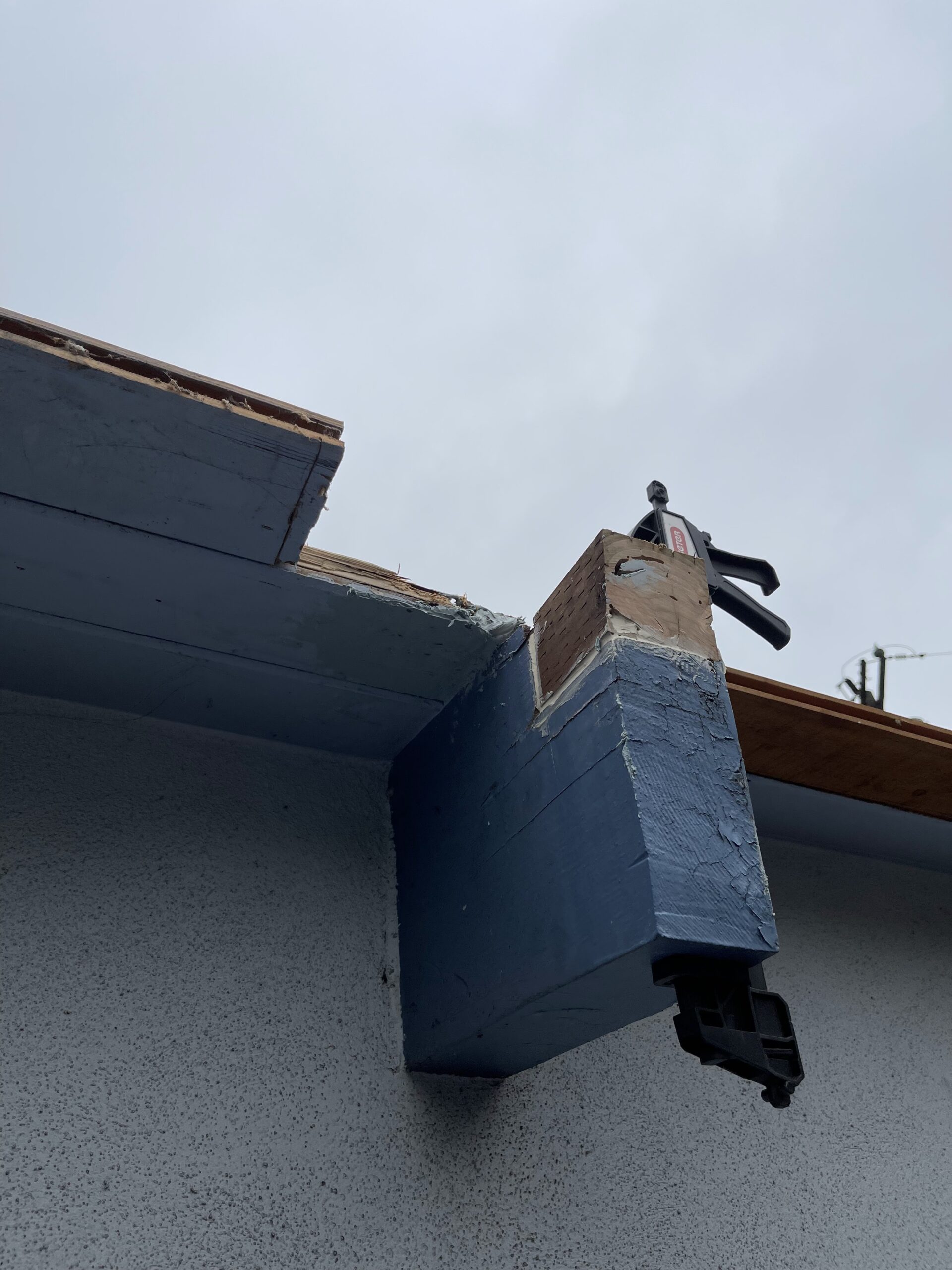
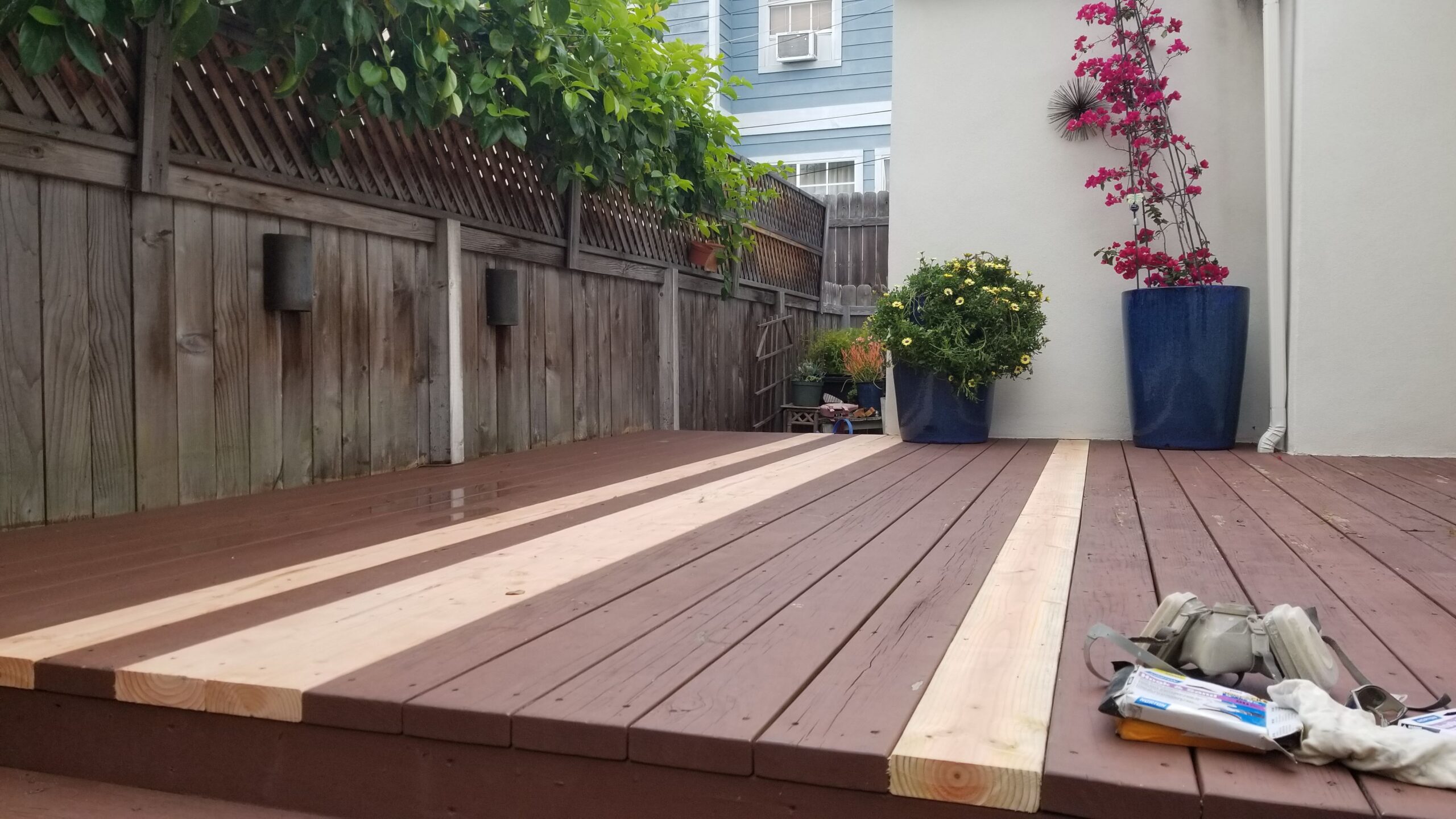
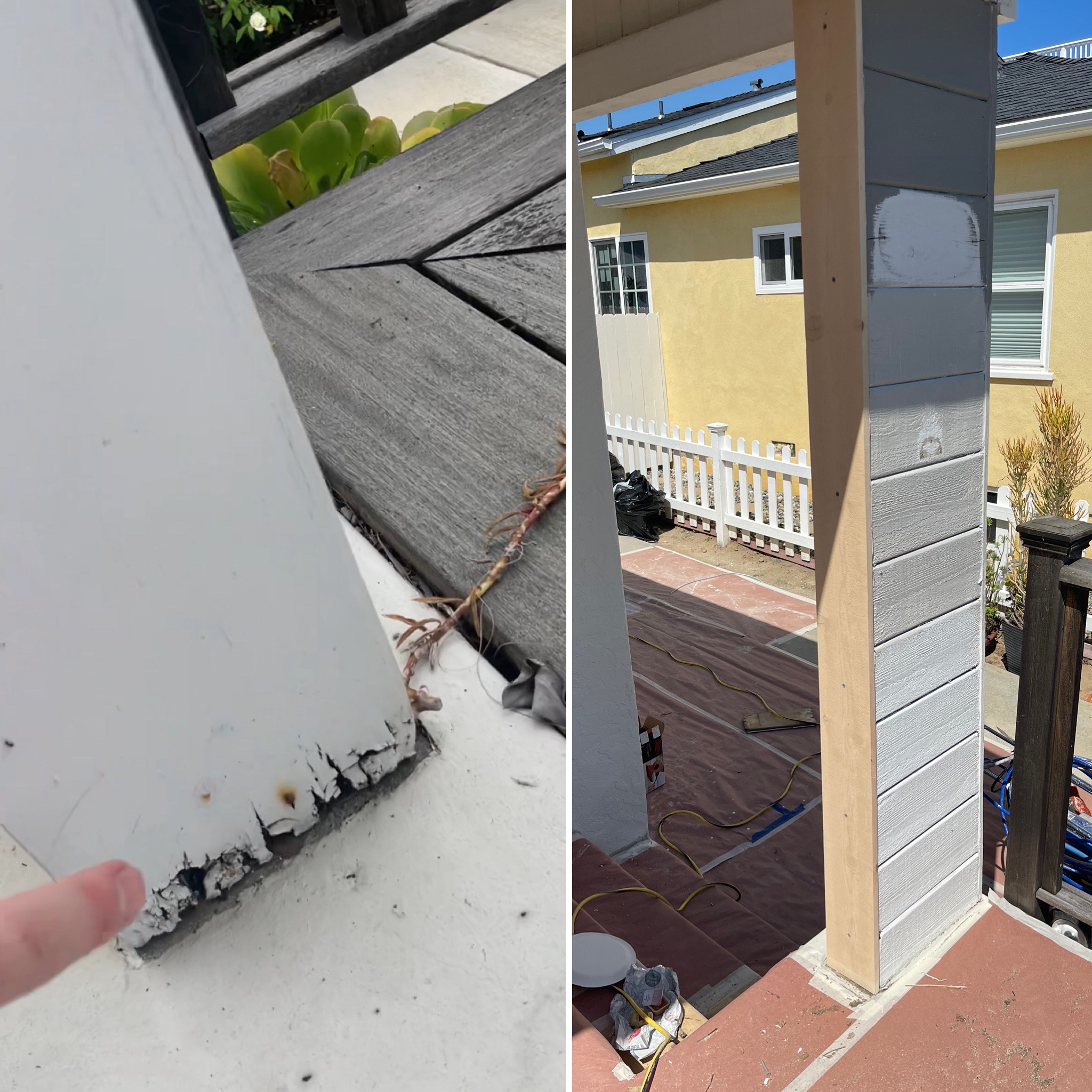
For a small defect surrounded by solid material, we may remove the loose wood and use a two-part exterior filler such as Bondo. If one end or short section has failed but the rest of the board is sound, we can often cut out that section and splice in new wood. Widespread decay, fungal growth, severe warping, or fastener failure calls for replacing the affected board. For the full decision process, read Wood Repair vs. Replacement: When Filler Is Not Enough.
Where Exterior Wood Damage Commonly Shows Up
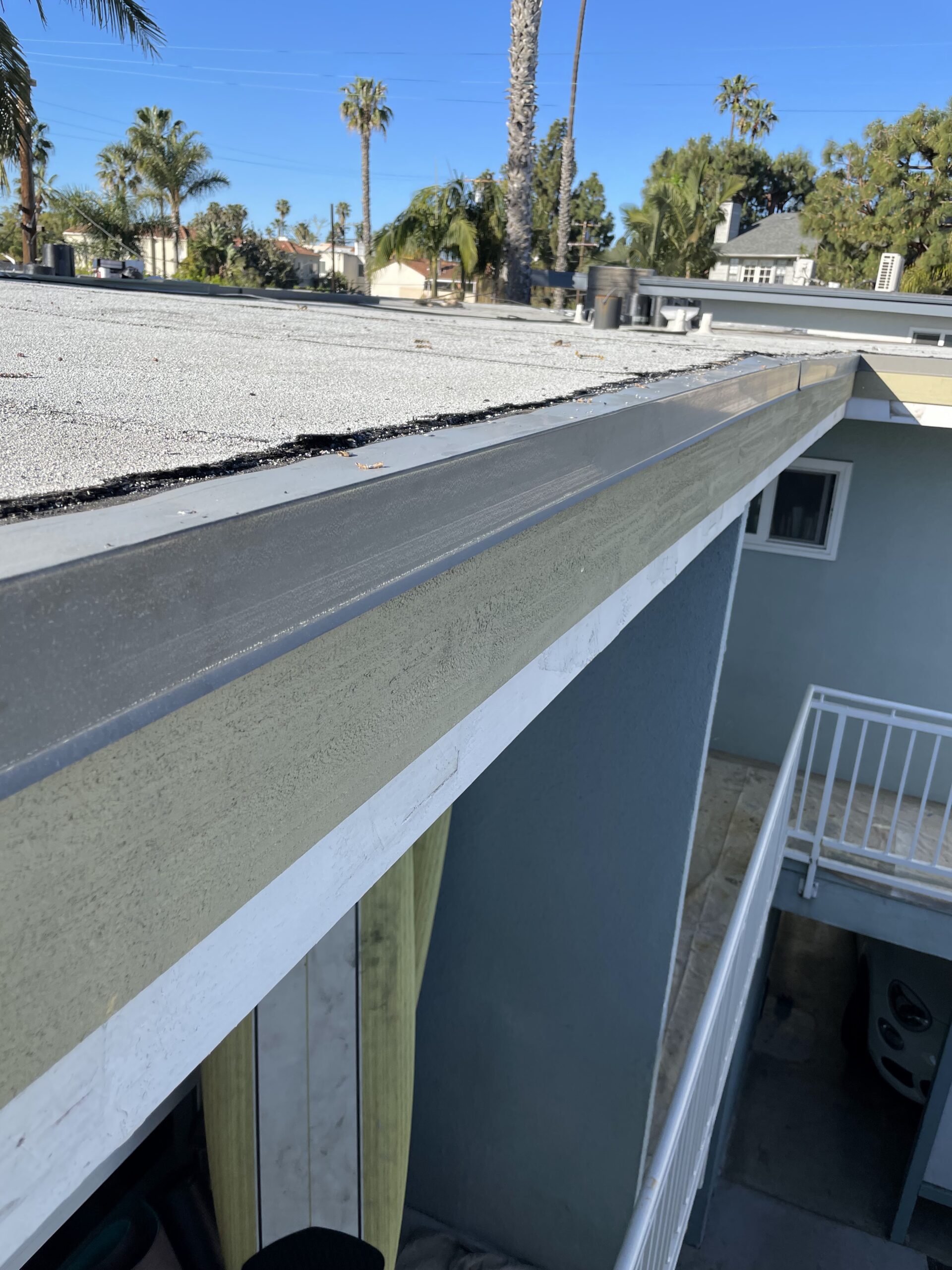
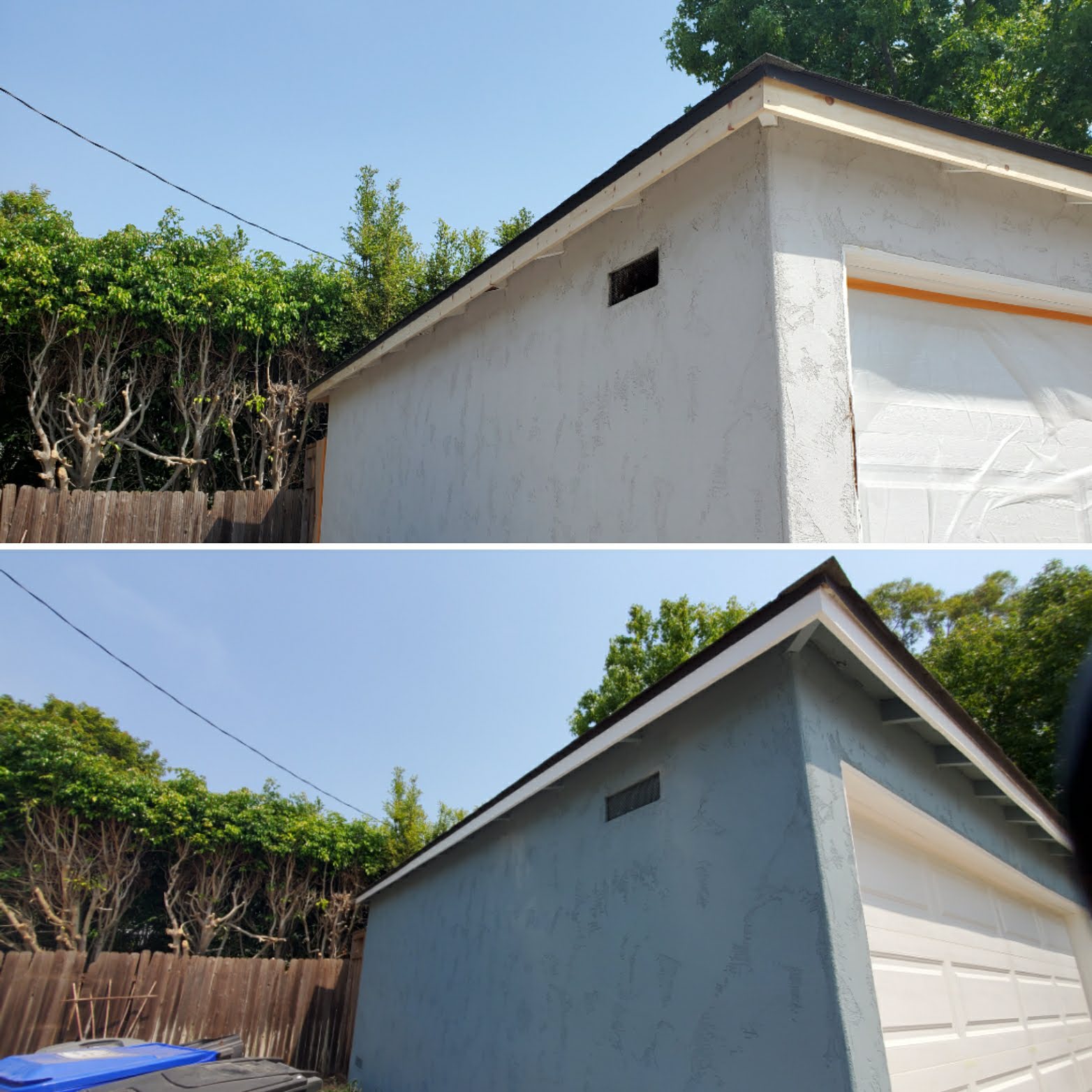
Fascia deserves close attention because it sits at the roof edge and often supports the gutters. A leaking, missing, or failed gutter can repeatedly direct water onto the board, while the gutter itself can hide damage from view. Eaves, window and door trim, garage-door casings, pergolas, trellises, fences, and gates can also develop peeling paint, open joints, cracks, and soft areas. During an estimate, we identify the affected component and location instead of grouping everything under a vague label such as “trim.” If drainage is contributing to fascia damage, the repair sequence may also need to coordinate with gutter installation or replacement.
What Changes the Wood Repair Scope, Cost, and Schedule
The repair method is only one part of the estimate. Scope also depends on how much sound wood remains, how deep the decay runs, the length and profile of the replacement piece, and whether the new section can be fastened securely. Access matters too: a short repair at ground level is different from work high on a roofline with difficult ladder placement. Attached gutters, nearby windows, plants, lights, and finished surfaces may add removal, masking, or protection time. The written scope should name each repair location and state whether the planned treatment is filler, a partial splice, or full-board replacement. It should also include the preparation that follows—sanding, spot priming bare wood, caulking included fascia gaps and seams, and painting the completed repair.
What Happens When Preparation Reveals Hidden Rot
An exterior inspection can identify visible failure, but it cannot expose every condition behind a gutter, coating, or adjoining board. Sanding off loose paint or removing decayed fibers may reveal that the affected area is larger or deeper than it first appeared. When that happens, the right response is not to cover the problem. The newly exposed condition should be documented, the repair recommendation updated, and any additional work explained in writing before it proceeds. A planned filler repair may become a splice or full replacement if the remaining wood cannot support the repair. Active termite activity, an unresolved roof or gutter leak, or structural deterioration may also need to be addressed by the appropriate specialist before the repaired surface is primed and painted.

Soft or Moisture-Damaged Wood

Fungal Growth
Rotten Sections
Termite-Damaged Wood
Scratches and Surface Damage

How We Turn Damaged Wood Into a Paint-Ready Surface
We start by locating the visible damage and checking where soft material ends and sound wood begins. A thumb or screwdriver that pushes easily into an already damaged area is a clear sign that the affected wood has lost strength. The estimate should identify the visible locations and the planned treatment—fill, splice, or replace—while allowing for scope changes if preparation exposes hidden damage.
Loose and decayed material is removed before any repair. Localized filler repairs are shaped and sanded; partial replacements are fastened back to sound wood; and failed boards are replaced where necessary. Bare and repaired wood is then primed. Fascia gaps and seams are caulked when they are included in the scope, and the area is painted to protect the completed preparation and blend it into the surrounding finish.
This sequence keeps the painting scope honest: the finish coat goes over a sound, paint-ready surface instead of concealing damaged wood. If the repair is part of a larger project, see our exterior painting services in San Diego, or request a wood-repair estimate.
What Our Clients Say

Wood Repair Projects
Wood Repair and Replacement FAQ
As a practical field rule, we usually repair or splice localized damage when roughly 80 percent or more of the board remains sound and replace the board when more than roughly 20 percent is soft, wet, or rotten. The final recommendation depends on the location and condition of the wood.
Justin generally limits this approach to an area of about 8 to 12 inches. It is a temporary repair rather than a substitute for a failed board.
That is an experience-based estimate, not a warranty. Widespread or deep decay should be replaced rather than filled.
Fascia is a common example: when a gutter is attached and only a short area has failed, a splice can avoid turning a localized repair into unnecessary full-board and gutter removal. Suitability is confirmed during inspection.
We cut back until the repair can connect to sound material.
Pest inspection or treatment, when needed, should be handled separately; our scope addresses the condition of the damaged wood.
Missing, leaking, or failed gutters can repeatedly direct water onto the board, while damage may remain hidden behind the gutter.