Gutter Installation in San Diego
Rain gutters are a small part of the exterior, but they manage every gallon of water that reaches the roof edge. J Brown Painting installs and replaces gutters in San Diego and can coordinate the surrounding fascia preparation, wood repair, and exterior painting in the right order.
The goal is practical: collect roof runoff, move it through the downspouts, and discharge it away from the walls and foundation area. During the estimate, we look at the existing system, roof edges, fascia condition, and the places where water currently lands so the scope addresses the actual problem.
Why Gutters and Downspouts Matter
Without gutters, rain falls directly from the roof and can repeatedly soak the ground beside the house. Justin Brown, J Brown Painting's founder and lead estimator, explains that this is why gutters primarily protect the foundation area. They also help protect fascia boards, roof edges, stucco or siding, doors, and windows from concentrated runoff.
Downspouts are just as important as the gutter troughs. A downspout that empties beside the wall can still leave puddles close to the building. Its extension and discharge point should move water several feet away when site conditions allow. The exact route depends on the property, grade, walkways, landscaping, and existing drainage.
Not every overflow means the entire system needs replacement. Leaves and debris can create some of the same symptoms as a failed gutter. We first distinguish a maintenance issue from loose, leaking, corroded, poorly routed, or damaged sections. Homeowners can also review what professional gutter cleaning involves before assuming replacement is the only answer.
-
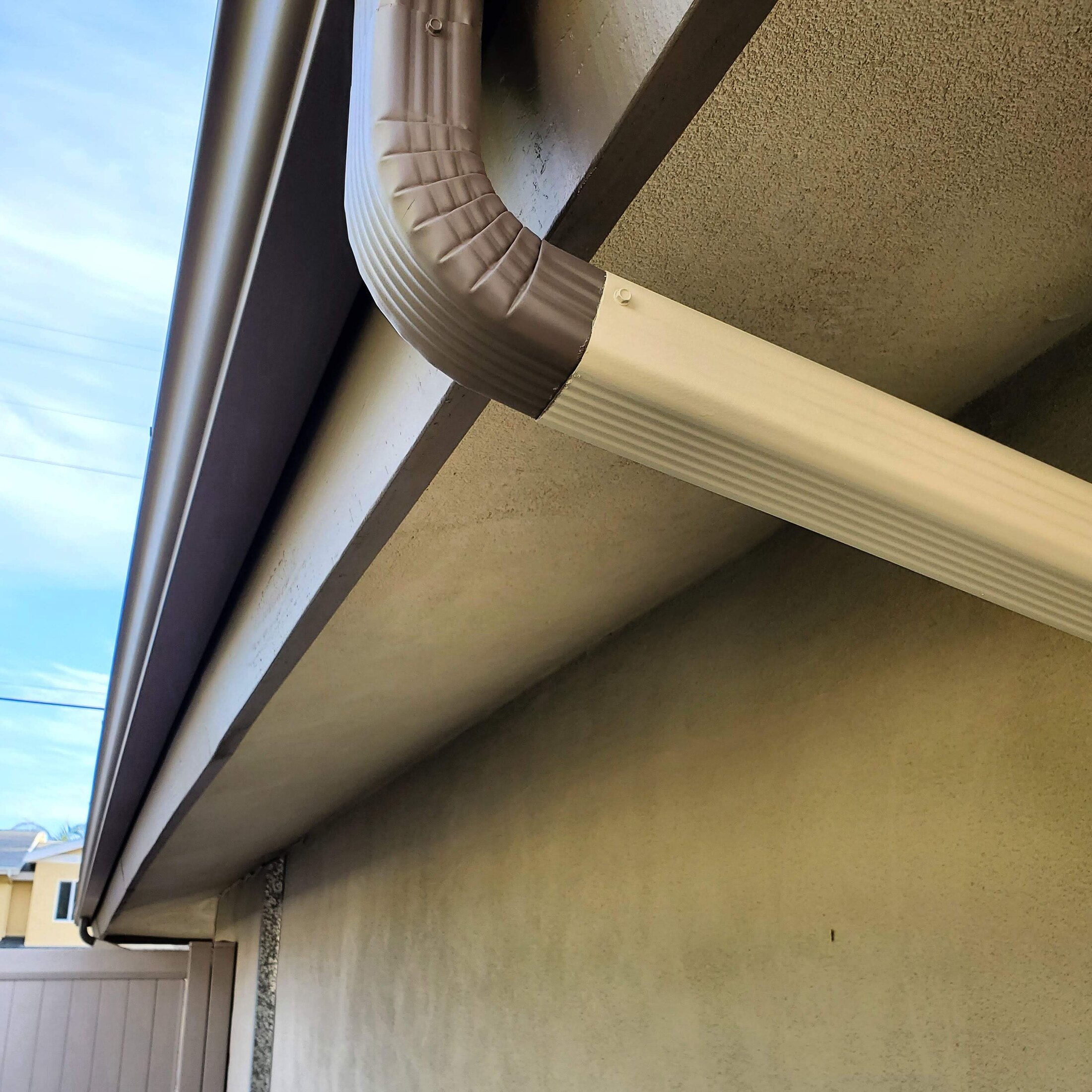
- A fitted downspout elbow carries water from the roofline into the vertical drain path.
-
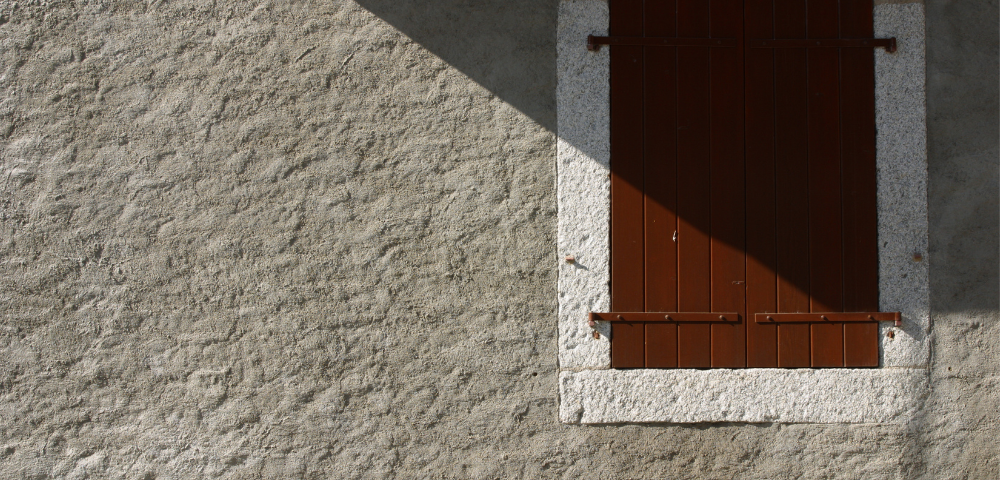
- The condition of the fascia and existing coatings matters before replacement gutters go up.
-

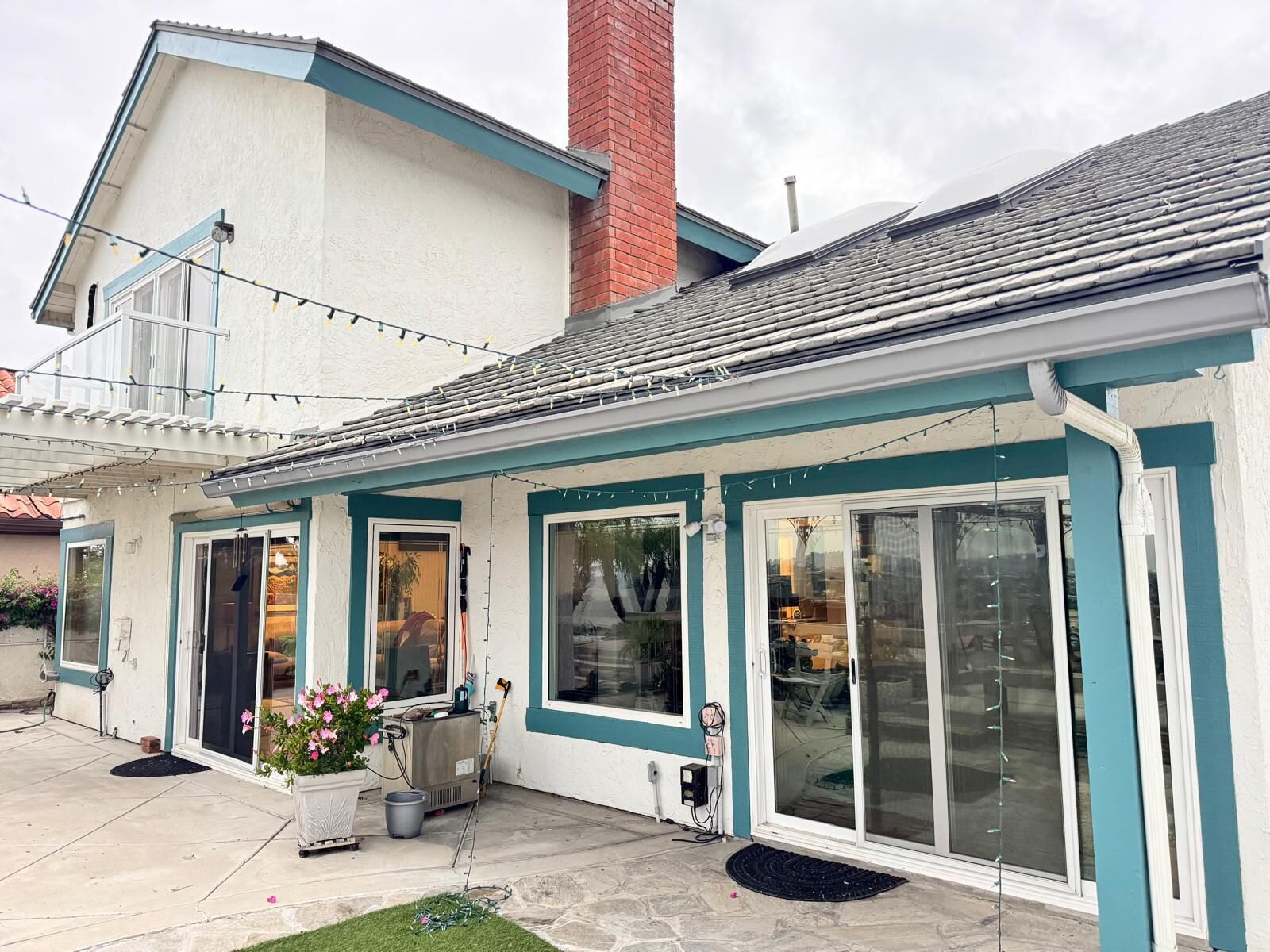
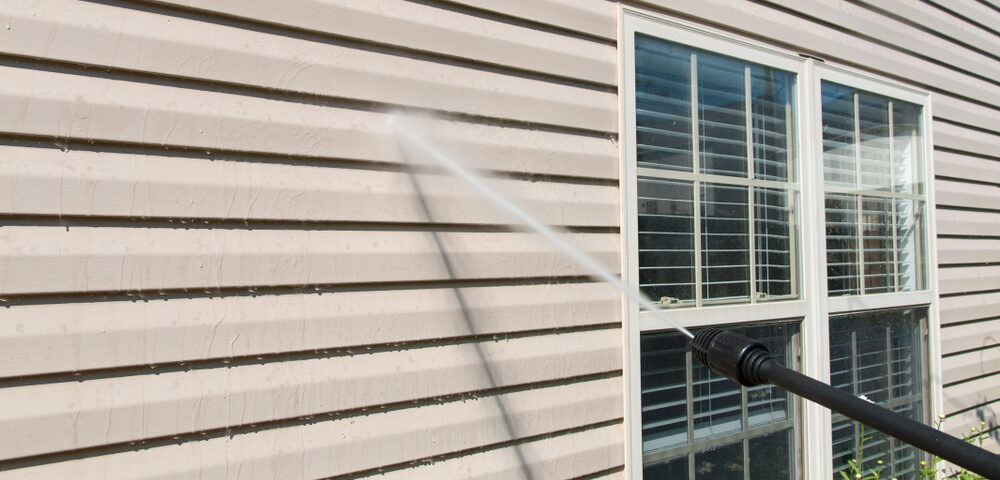
- Gutters, downspouts, windows, and adjacent surfaces are coordinated during exterior work.
-

- Gutters collect roof runoff while downspouts move it away from the walls and foundation area.
-

- Factory-finished or painted gutters can be coordinated with the fascia and exterior trim.
A Coordinated Gutter Replacement Process
A useful gutter estimate starts with the water path. We review where runoff reaches the roof edge, where downspouts can discharge, and whether the existing fascia is sound enough to support the work. The proposal should separate removal, fascia preparation or repair, new gutter installation, downspout routing, and optional coating so you can see what is included.
1. Remove and expose the fascia when replacement is needed
Old gutters can hide peeling paint and deteriorated wood. Removing them first makes the attachment surface visible. Sound fascia can be cleaned, sanded, primed where needed, and painted. Soft or damaged sections should be evaluated before a new system covers them. Learn how we decide between localized repair and replacement on our San Diego wood repair page.
2. Complete the protected surface before installation
When possible, fascia is prepared and painted before the new gutters are installed. That allows the coating to cover the board completely, including the area that will sit behind the gutter. It avoids leaving an inaccessible strip of bare or failing material.
3. Install the gutters and finish the color plan
Factory-finished gutters often arrive in a suitable color and need no field painting. If the selected color is not available, the alternate sequence is to install the gutters, then prepare, prime, and paint them so they coordinate with the fascia. J Brown Painting can manage both parts of that sequence instead of leaving the homeowner to coordinate separate crews.
Fascia Preparation, Gutter Installation, and Painting
The strongest result comes from treating gutters, fascia, and coating work as one exterior system. Installing new gutters over peeling fascia hides the problem; painting only the visible edge after installation leaves the covered wood untreated. Planning the order first protects the attachment surface and produces a cleaner finished line.
For painted gutters, preparation depends on the substrate. Existing paint that is clean, sound, and well bonded may accept a compatible premium exterior coating without a separate primer. Bare aluminum is different: Justin's field method is to clean it thoroughly, lightly scuff it when appropriate, apply a bonding primer, and finish with two coats of premium 100% acrylic exterior paint.
Satin is the usual recommendation because it balances appearance with easier cleaning. Semi-gloss is also practical when a homeowner prefers a smoother, more washable finish. Bright white and fascia-matched colors remain common; bronze can suit tan stucco or brown roofs, while black often works with modern exteriors and black window packages.
Protecting or painting gutters during exterior work
If sound gutters are staying in place while the house is painted, they should be masked as part of the surface-protection plan. Justin's method uses exterior painter's tape and masking paper carried from the back of the gutter, around the exposed face, and into the trough. That protects the full visible surface from overspray instead of covering only the front edge.
When gutters are being painted, spraying is usually preferred for a more uniform finish. Long gutter runs make roller start-and-stop marks especially easy to see. The finish method is discussed during planning along with access, the condition behind old gutters, the number and routing of downspouts, and whether the selected color is factory-finished or requires a separate coating system. Those details affect the scope more than a generic per-foot promise.
- Review roof edges, fascia condition, and the current water path
- Remove old sections when replacement is part of the scope
- Prepare or repair the exposed fascia before covering it again
- Install gutters and route downspouts toward an appropriate discharge area
- Use a factory color when it already fits the exterior plan
- For a custom color, coordinate installation with surface preparation and painting
- Use bonding primer on bare aluminum before premium exterior finish coats
- Choose satin or semi-gloss rather than a flat finish